
5 Science-Backed Ways to get Your Kids Ready for School

We spend weeks preparing our kids for a new school year buying backpacks, sharpening pencils, and organizing schedules. But one of the most important school supplies isn’t something you can pack in a backpack. It’s a healthy, well-prepared brain.
The Tale of Two Daily Learning Slumps: Can Better Classroom Lighting Help Students Stay Focused?
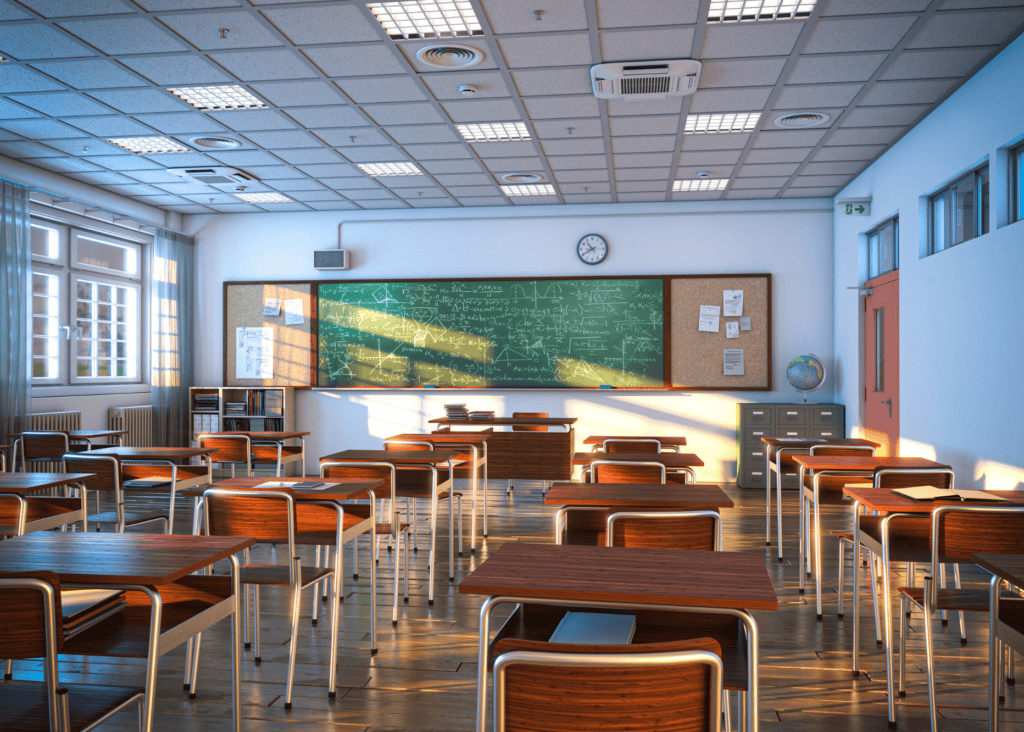
Every teacher has seen it happen.
The first bell rings, and some students are tardy while others look half-awake. Then, just as the day seems to hit its stride, attention begins to drift again after lunch. While these periods of reduced focus are often accepted as an unavoidable part of school life, research suggests they are linked to predictable biological rhythms that may be mitigated by healthy exposure to blue-sky light. Indeed, improved classroom lighting may be one of the most practical tools schools have for boosting cognitive performance.
What is Healthy Blue Sky Lighting–and Why It Matters Indoors

When I was working with researchers at NASA, studying how lighting affects human physiology, one realization stood out clearly: we have a fundamental problem here on Earth in the way we design buildings and light them.
Boosting Healthy Blue Sky in a Tinted Window World

Modern buildings increasingly rely on tinted or coated glazing to control solar heat gain and improve energy efficiency. While these technologies reduce cooling loads and glare, they can also unintentionally reduce an important biological signal from daylight: melanopic light, the blue-rich component of daylight that helps regulate the human circadian rhythm to boost mood, focus, alertness, productivity and sleep. Understanding this trade-off is becoming essential for architects, lighting designers, and building owners focused on occupant health and performance.
Human-Centric Lighting Proves Its Value in Hospitality – Key Takeaways

We wanted to share this compelling article on occupant lighting preferences with you that was just posted on Inside Lighting. It focuses on new research by Wasti & Chauhan, (2025) published in Scientific Reports, where 100 guests at four resorts were surveyed using questionnaires and field observations. It found that lighting tuned to human rhythms — especially lighting that mimics natural daylight cycles — had clear psychological benefits.
Beyond the Classroom: How Healthy Office Lighting Shapes the School Experience

School front office staff play a critical role in home-school relations. While much attention falls on students and teachers, non-teacher staff—secretaries, nurses, administrative assistants, custodial leads, counselors—play vital, often underappreciated, roles in school climate, operations, and student/parent/staff interactions (Thomson et al. 2007). Their alertness, mood, and well-being directly influence how smoothly the school functions. School offices and support rooms are often not subject to the same architectural daylighting and wellness considerations as classroom spaces, creating an inadequate environment for key functions.
A Window on Melanopic Light: How View Direction Dramatically Impacts Natural Light Exposure

One might say that the healing power of nature is real, but it depends on your point of view. This is particularly true of the health benefits of natural light. If we can see the daytime sky, even indoors through a window, we can be reasonably sure that we are getting the melanopic light we need to set and maintain our circadian rhythms, which drive our health and wellbeing. But what if we’re not looking out the window? It turns out that the impact of gaze direction on melanopic exposure is substantial. You could be turning your back on health.
SkyView™ Dampens Daylight Saving Effect in School Kids – Results from the Parent Study – Part 2

Every year, millions of people around the world adjust their clocks forward or backward by an hour as part of daylight savings (DLS) time. While the intention behind this practice is to optimize daylight hours and conserve energy, its effects on health can be profound and often overlooked. The shift in time disrupts our circadian rhythm, the internal body clock that regulates sleep-wake cycles, hormone release, and other fundamental physiological processes. This disruption can lead to a range of health issues, from mild discomfort to more serious conditions.
Circadian Lighting Improves Child Sleep Transitions and Mood – The Parent Study – Part 1

The rising of the sun is an evolutionary cue to our bodies to begin our days. The day’s sun brings energy, but it also synchronizes our circadian clock, our body’s rhythm that drives everything from energy levels, to metabolism, to mood and mental focus.
School and Hospital Wellness Rooms Seen in a New Light
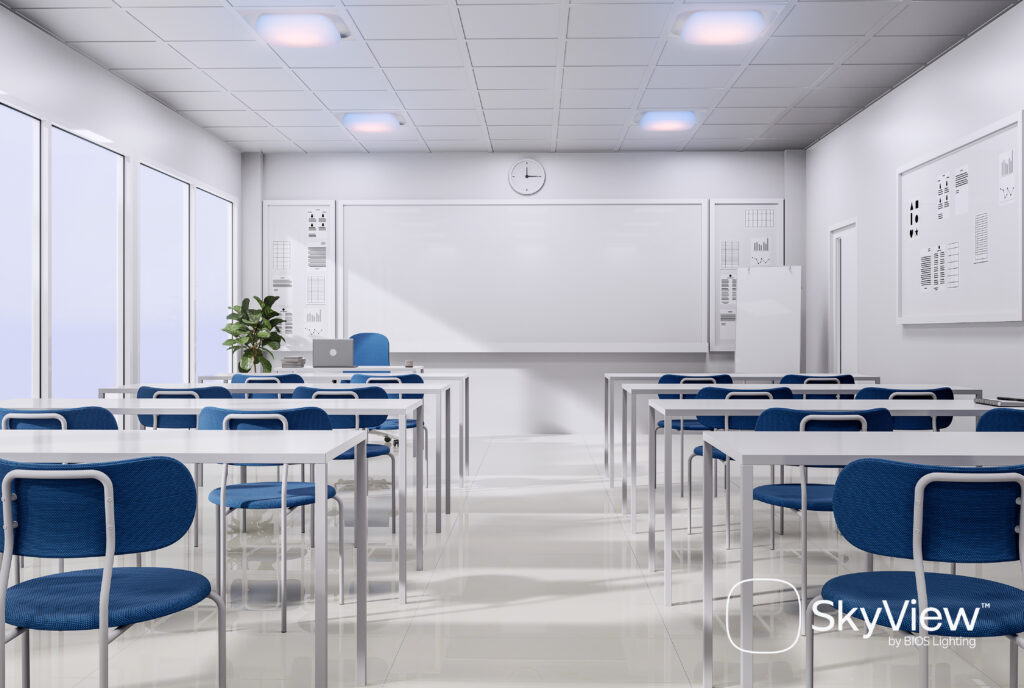
Wellness and calming rooms are increasingly common in K–12 schools and hospitals to reduce stress, improve focus, and support emotional well-being. These spaces often include sensory tools, comfortable seating, and adjustable lighting. However, lighting is typically limited to changes in color or brightness, lacking the high-melanopic circadian lighting crucial for supporting, mood, alertness and regulating biological rhythms—especially important given that most classrooms and offices have bright but sky-blue-deficient lighting.