


Daylight: More Than Visual Illumination
Natural daylight contains a broad spectrum of wavelengths. Of particular importance to human biology are the blue-rich wavelengths around ~480-490nm that stimulate melanopsin-containing retinal ganglion cells in the eye. These cells influence circadian entrainment, alertness, and hormone regulation (Enezi et al. 2011; Cajochen et al. 2019).
Researchers now commonly quantify the circadian effectiveness of light using melanopic equivalent daylight illuminance (m-EDI) from the CIE S 026, and equivalent melanopic lux (EML) from the WELL Building Standard v2 which represents the biologically-effective strength of a light source compared with natural daylight.
Studies of indoor daylight environments show that glazing properties strongly influence both photopic illuminance (visual brightness) and melanopic illuminance (circadian stimulus). In full-scale experiments comparing different window systems, glazing with lower spectral transmission significantly reduced the melanopic daylight reaching occupants indoors (Hraška & Hartman 2023).
The Role of Window Tinting
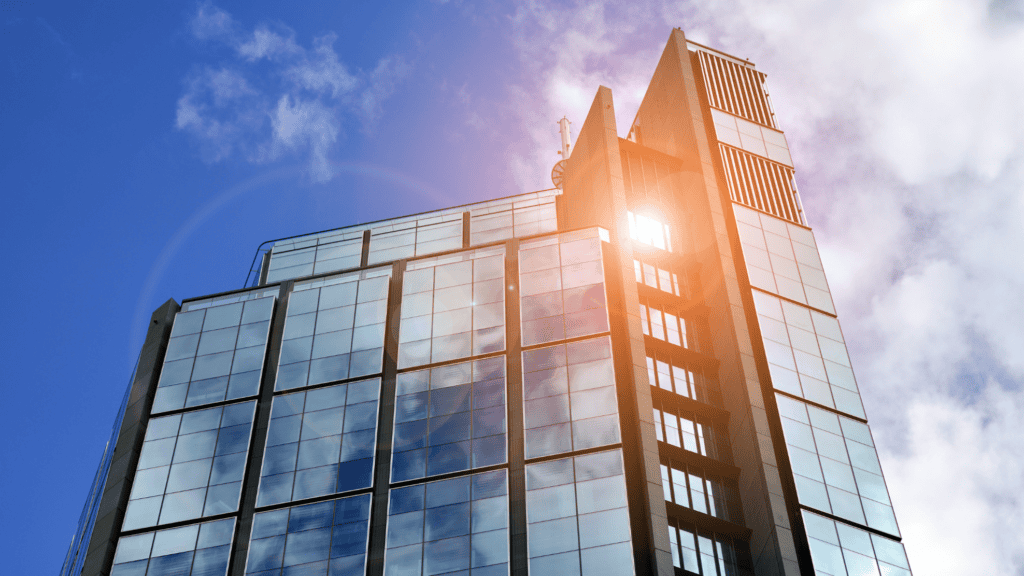
Tinted glazing, reflective coatings, and low-emissivity (low-E) layers are widely used to reduce solar heat gain and improve building energy performance. These technologies work by reflecting or absorbing portions of the solar spectrum.
Typical glazing systems vary dramatically in visible light transmittance (VLT):
- Clear glazing: ~70-80% VLT
- Standard tinted glazing: ~40-60% VLT
- Reflective or heavily tinted glazing: as low as ~15-20% LVT
Because melanopic light is concentrated in the blue portion of the spectrum, many tints and coatings disproportionately reduce the wavelengths that drive circadian stimulation. Spectral simulation studies of different glazing technologies have shown that dynamic or thermochromic windows can significantly alter the melanopic-to-photopic ratio, specifically calculated as the standard melanopic daylight equivalency ratio (MDER), of transmitted daylight, sometimes lowering it below 0.9 in a large fraction of conditions (Nazari, et al. 2023; Sanchez-Cano et al. 2024).
In practice, this means that occupants in heavily tinted buildings may experience significantly less circadian-effective daylight—even if the space appears visually bright.
Glazing/Tint Type
Typical VLT (%)
Impact on m-EDI
Circadian Efficacy (M/P Ratio)
Best Use Case
Clear Glass (Single/Double)
80%- 90%
Highest: Minimal obstruction of circadian-effective light.
High (~1.0+)
Standard daylighting; maximizing alertness.
Neutral Grey Tint
30%-50%
Moderate: Reduces light intensity uniformly across the spectrum.
Medium (Neutral)
Glare control while maintaining natural color.
Bronze/Gold Tint
20%-40%
High: Blocks significant blue light, lowering biological potency.
Low < 1.0)
Warm aesthetics; high heat rejection.
Blue/Green Tint
40%-60%
Varied: May preserve blue wavelengths but reduces overall intensity.
Medium to High
Balancing heat gain with some circadian signal.
Low-E Coating (Spectrally Selective)
50%-75%
Slight to Moderate: Designed to block IR/UV while passing visible light.
Medium
Energy efficiency with decent light quality.
Reflective/Mirrored
10%-25%
Extreme Reduction: Most restrictive; often requires supplemental artificial light.
Very Low
Maximum privacy and heat rejection.
Why Buildings Use Tinting in the First Place
Window tinting is primarily driven by energy and comfort requirements. Solar radiation entering through windows can dramatically increase cooling loads, particularly in warm climates.
Building energy standards such as ASHRAE 90.1, IECC, Title 24 and other building codes regulate glazing performance using metrics such as:
- Solar Heat Gain Coefficient (SHGC) – fraction of solar heat entering through glazing
- U-Factor – thermal insulation performance
- Visible Transmittance (VT) – percentage of visible light passing through the window
To reduce cooling loads. (and make code), designers often specify windows with low SHGC values and moderate visible transmission. For daylighting strategies, guidelines often recommend visible transmittance above ~70% when possible on ground floors (for safety) but as little as 15% transmittance on higher floor.
The trend is for increasingly conservative codes like California Title 24, Part 6 (Building Energy Efficiency Standards) – currently one of the most stringent state codes in the U.S.. It requires windows to meet specific SHGC maximums (typically 0.23 or lower in most California climate zones).
Thus, many modern commercial building guidelines and codes prioritize considerable transmittance drops for boosted energy performance, leading to darker glazing that reduces heat gain but also diminishes biologically important daylight.
Smart Windows and Circadian Light
The emerging trend of smart window implementation may cause dramatic transmittance reductions during peak daylighting, further reducing healthy light exposure. Electrochromic smart windows dynamically adjust tint, typically shifting visible transmittance (VT) from about 60% when clear to ~3% when darkened. While this reduces glare and cooling loads, darker states greatly reduce transmitted blue-sky wavelengths—potentially lowering indoor melanopic daylight exposure (Clear et al. 2006; Lee & Song 2023) despite being in relatively bright outdoor climates.
The Hidden Health Trade-Off of Window Tinting
When glazing significantly reduces daylight transmission, the indoor environment may fall below levels needed to support drivers of mood, focus, alertness and circadian health. Recent daylighting research highlights that traditional lighting design metrics focused only on visual brightness can miss these biological effects (Boubekri et al. 2020; Ezpeleta et al. 2021; Burns et al. 2022).
For example, two spaces with identical photopic lux levels may differ greatly in melanopic content depending on glazing, sky conditions, and interior lighting.
Key Considerations for m-EDI
- Daytime Goal: Expert guidelines including RP-46-25 recommend a minimum daytime m-EDI of 250 lux at the eye level (measured vertically) to promote health and alertness.
- MDER: This standard measure compares melanopic (biological) light to photopic (visual) light. A ratio above 1.0 indicates the tint is “blue-enriched” relative to standard daylight, while below 1.0 means it is “warm” or blue-depleted.
- Distance Matters: m-EDI levels drop significantly as you move further away from the window compounding the healthy blue sky light loss caused by low window transmittance.
- Occupant Control: The use of manual or automated blinds often has a greater impact on m-EDI than the tint itself, as closed blinds can reduce light levels to near-zero.
The result is a growing recognition that energy-efficient buildings can inadvertently become circadian-inefficient buildings.
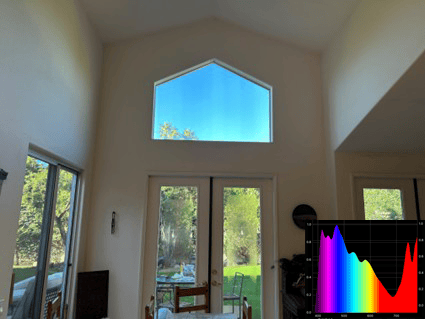
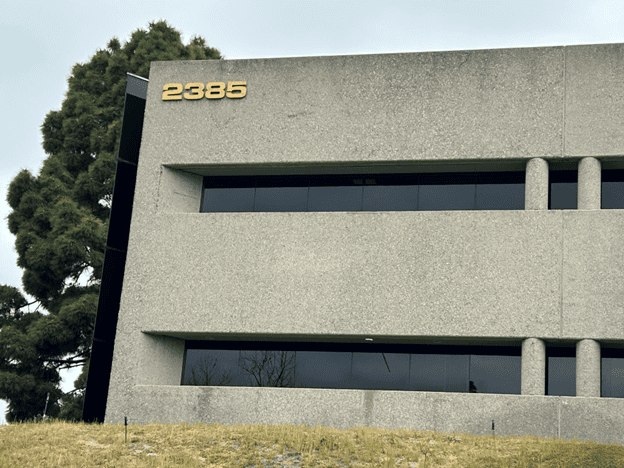
An example of an energy-efficient, well-tinted home in Palm Springs, California. The windows had a VLT of 14%. The result was despite the bright, comfortable interior at 254 lux (horizontal plane), the melanopic exposure (m-EDI, vertical plane) was 82 lux, providing only 33% of the needed 250 m-EDI daytime blue sky threshold).
How Healthy Blue Sky Lighting Systems Can Help
One solution to counter the loss in healthy blue sky signals due to window transmittance is to supplement natural daylight with lighting designed to replicate the biological spectrum of the sky.
Blue sky lighting systems such as BIOS’ SkyView™ are engineered to deliver high melanopic output in a natural feeling, low-glare luminaire form factor to restore the circadian signal that may be lost through tinted glazing.
Because these systems emulate the spectral composition of blue sky daylight, they can help indoor environments maintain healthy daytime melanopic stimulation even when architectural constraints limit daylight access.
This approach effectively decouples circadian lighting from window performance, allowing buildings to optimize both:
- Energy performance and heat control thought advanced glazing
- Occupant health and alertness thought biologically effective lighting
The results of implementing SkyView™ healthy blue sky lighting technology are well documented in field and clinical studies where dramatic boosts in mood, focus, alertness and performance measures were observed in office environments. (Soler & Long 2025).
Lighting Design for Both Energy and Health
As the science of healthy, circadian-friendly blue sky lighting continues to mature, building designers increasingly recognize that daylighting strategies must balance three factors:
- Energy efficiency (low SHGC, thermal performance)
- Visual Comfort (glare control and brightness)
- Biological lighting quality (adequate melanopic exposure)
Tinted glazing improves energy performance but can weaken the natural blue sky signal that humans evolved to experience during the day. By combining thoughtful glazing design with circadian-optimized blue sky lighting solutions such as SkyView™, buildings can support both sustainability goals and occupant performance and well-being.
Literature Cited
Boubekri M, Lee J, MacNaughton P, Woo M, Schuyler L, Tinianov B, Satish U. The impact of optimized daylight and views on the sleep duration and cognitive performance of office workers. International journal of environmental research and public health. 2020 May;17(9):3219.
Burns AC, Windred DP, Rutter MK, Olivier P, Vetter C, Saxena R, Lane JM, Phillips AJ, Cain SW. Low daytime light and bright night-time light are associated with psychiatric disorders: an objective light study in> 85,000 UK Biobank participants. medRxiv. 2022 Oct 17:2022-10.
Cajochen C, Freyburger M, Basishvili T, Garbazza C, Rudzik F, Renz C, Kobayashi K, Shirakawa Y, Stefani O, Weibel JJ. Effect of daylight LED on visual comfort, melatonin, mood, waking performance and sleep. Lighting Research & Technology. 2019 Nov;51(7):1044-62.
CIE S 026/E:2018; CIE System for Metrology of Optical Radiation for IpRGC-Influenced Responses to Light. International Commission on Illumination: Vienna, Austria, 2018.
Clear RD, Inkarojrit V, Lee ES. Subject responses to electrochromic windows. Energy and Buildings. 2006 Jul 1;38(7):758-79.
Enezi Ja, Revell V, Brown T, Wynne J, Schlangen L, Lucas R. A “melanopic” spectral efficiency function predicts the sensitivity of melanopsin photoreceptors to polychromatic lights. J Biol Rhythms. 2011 Aug;26(4):314-23. doi: 10.1177/0748730411409719.
Ezpeleta S, Orduna-Hospital E, Solana T, Aporta J, Pinilla I, Sánchez-Cano A. Analysis of photopic and melanopic lighting in teaching environments. Buildings. 2021 Sep 27;11(10):439.
Hraška J, Hartman P. Assessing photopic and melanopic daylighting performance of special glazing system: A full-scale experiments. Selected Scientific Papers-Journal of Civil Engineering. 2023 Jan 14;17(1):1-3.
Illuminating Engineering Society. ANSI/IES RP-46-25: Recommended Practice: Supporting the Physiological and Behavioral Effects of Lighting in Interior Daytime Environments. 2025.
Lee SJ, Song SY. Energy efficiency, visual comfort, and thermal comfort of suspended particle device smart windows in a residential building: A full-scale experimental study. Energy and Buildings. 2023 Nov 1;298:113514.
Nazari M, Matusiak B, Stefani O. Utilising spectral lighting simulation technique for evaluating transmitted daylight through glazing: Exploring the non-visual effects and colour appearance. Heliyon. 2023 Oct 1;9(10).
Sanchez-Cano A, Orduna-Hospital E, Aporta J. Photopic and Melanopic Analysis of Daylight Through Glazing in Indoor Environments. Buildings. 2024; 14(10):3291.
Soler R and Long K. Boosting sky-blue light indoors improves fundamental drivers of office productivity. BIOS 2025.
WELL Building Standard v2; IWBI International Well Building Institute: New York, NY, USA, 2021.