

You can read the full Inside.lighting article, here: https://inside.lighting/news/26-02/human-centric-lighting-proves-its-value-hospitality
The published research article can be read here: https://www.nature.com/articles/s41598-025-21024-3
3 Key Takeaways for Lighting Design
1. High-performing lighting should match a space’s function on a fundamental biological level.
Spaces that are designed with the occupants in mind are paramount for sustained well-being. The research shows that naturalistic light aligned to a space’s function is preferred. Shifting from static CCT specification to dynamic lighting strategies that follow natural daylight progression (cooler/brighter daytime → warmer/dimmer evening) help users experience a boost in mood, focus, alertness and increase performance.
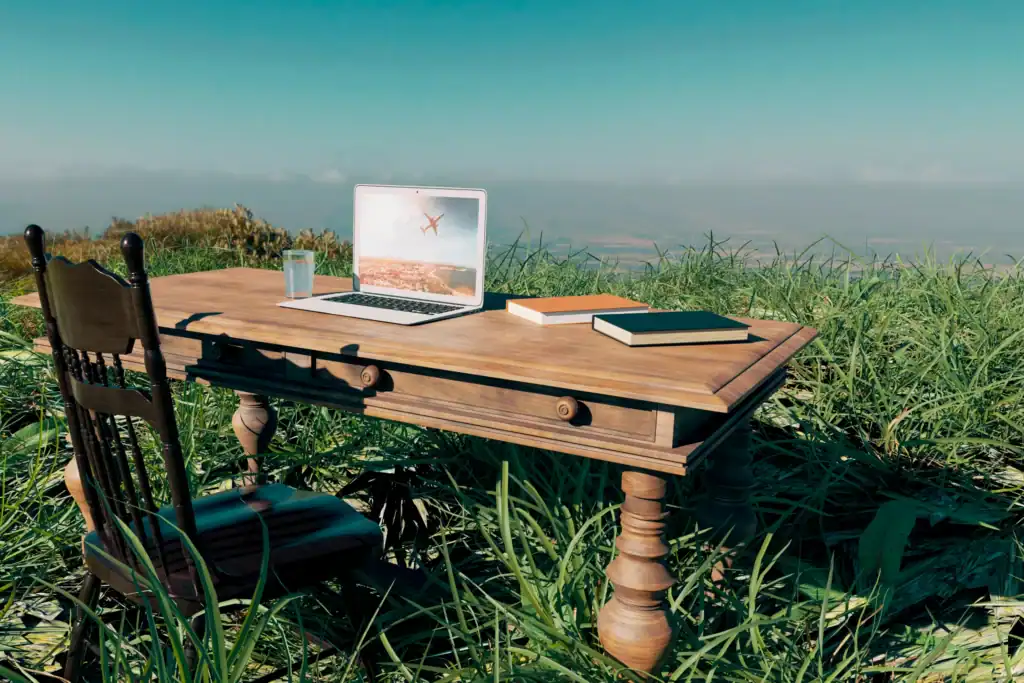
This research also points out that uniform lighting schemes underperform. While this research was mainly focused on hospitality and resort guest satisfaction, the takeaway is this: lighting should match the activity being performed in the space, not just aesthetic appeal. With cooler/brighter spaces driving vigilance and performance, just like we get from a blue-sky day in nature, special attention should be paid to areas where human performance is the main focus.
2. Color Temperature Alone is not enough to underlie preferred lighting.

One key takeaway from this study is that successful lighting systems are not accomplished by CCT. Using products like SkyView™ Tile combine the ability to provide not only the appropriate color temperatures and spectrum to replicate what our bodies crave from nature (The right mix of CCT, Intensity and Direction of light), but also include:
- Smooth dimming
- Glare control
- Balanced daylight integration
- Appropriate vertical illumination levels
The translation for designers is that a 3000K static fixture is not optimal for what our bodies need to thrive in an indoor environment. The research suggests that standard static fixtures are too restricted even with tunable white. The combination of CCT and intensity in traditional fixtures makes it difficult to achieve natural-feeling, low glare, high-melanopic light at acceptable power usage.
3. Practical application of healthy, gradient CCT blue sky lighting can restore natural feeling light.
The researchers described the occupant preferences as directed toward “sustainable lighting” – referring to lighting solutions that are generally
“…energy-efficient, environmentally responsible, and psychologically beneficial.”
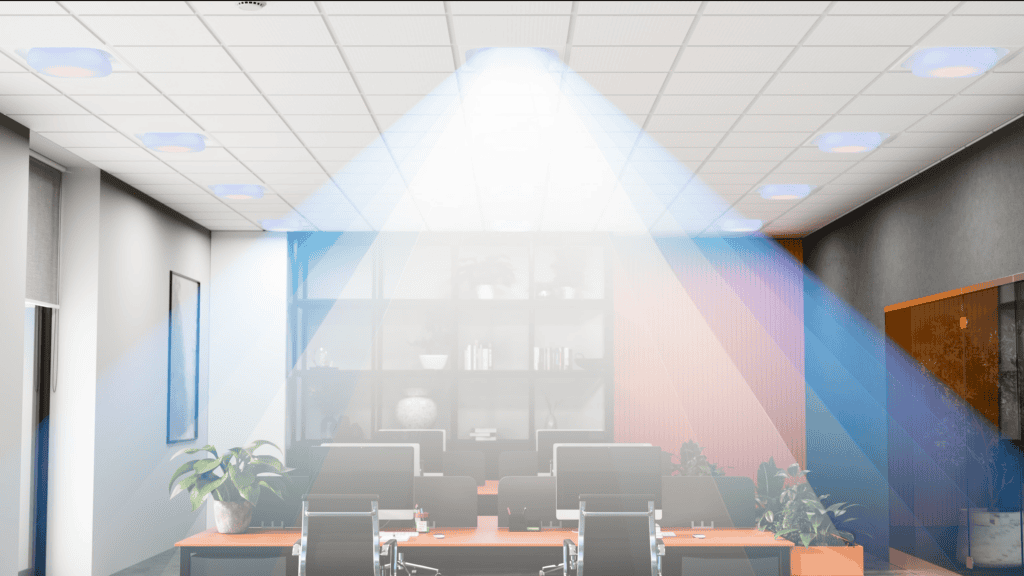
They go on to describe that such systems should both the technological (source and controls) and experiential (comfort, ambience) aspects of lighting. This approach precisely aligns with the BIOS SkyView™ Healthy Blue-sky Lighting mission. SkyView™ is a worthy solution because it provides:
- Clinical and field testing supported improvements in mood, focus, alertness, and productivity (reviewed in Soler & Long, 2025);
- patented blue-sky color gradient technology that delivers comfortable, low glare, natural-feeling general illumination;
- RP-46-25 compliant 250 lx of m-EDI light on the vertical plane and adequate warm CCT light on the horizontal task plane;
- Energy efficient LED light (0.4W/ft2) with simple controls;
- Alignment with leading global standards in material health and sustainable design including WELL Building Standard, Declare, LEED, and the HPD.
What Does This All Mean?
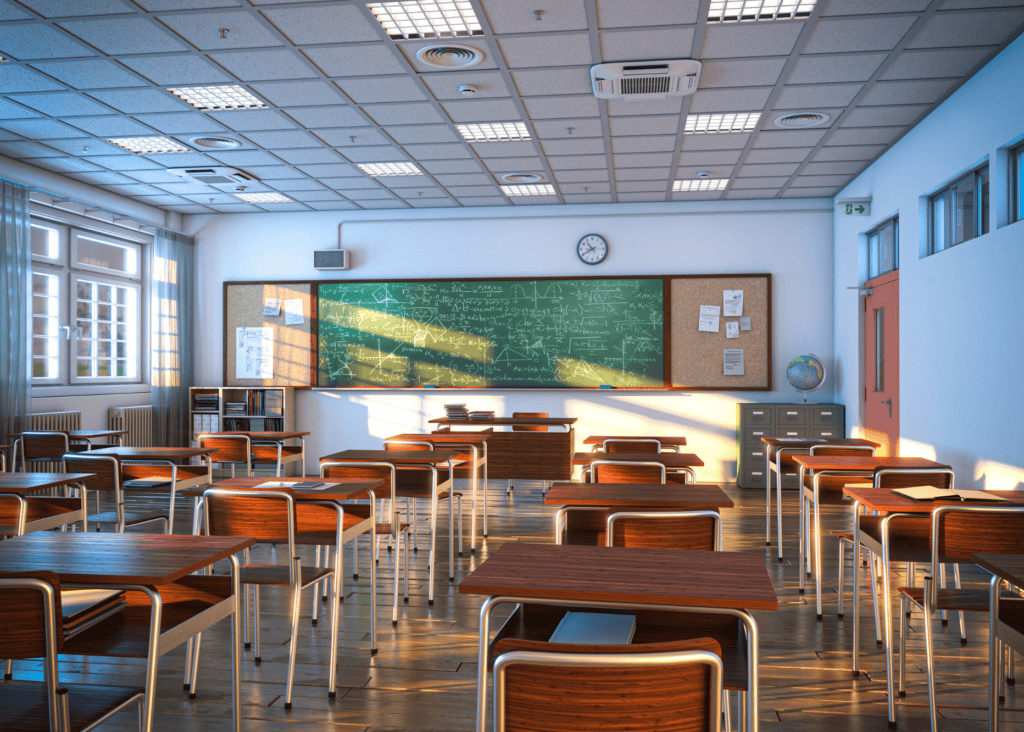
The tide is turning. Lighting in hospitality (and many other commercial applications, like schools, back-of-house and corporate office space) is moving from aesthetic enhancement to measurable performance and wellness driver. Projects that align lighting to circadian patterns, activity zones, glare control, and user control outperform static, uniform lighting schemes in guest satisfaction and perceived luxury.
The research authors felt that sustainable lighting practices offer “significant benefits not only in terms of energy efficiency and environmental impact but also in enhancing the psychological well-being of guests”, a sentiment supported by earlier hospitality lighting researchers (El-Sayed & Abed, 2021).
To learn more about the BIOS Lighting SkyView™ products and technology, please reach out to your local lighting rep (https://bioslighting-skyview.com/agency-map/) or contact us directly (https://bioslighting-skyview.com/contact/) to schedule a presentation.
References
El-Sayed, S. and Abed, M. The use of sustainability principles and lighting technology in lighting hotels’ lobby area. J. Assoc. Arab. Univ. Tour. Hosp. https://doi.org/10.21608/jaauth.2021.97836.1243 (2021).
Soler, R. and Long, K. Boosting sky-blue light indoors reveals fundamental drivers of office productivity. BIOS 2025. https://bioslighting-skyview.com/boosting-productivity-with-sky-blue-light/
Wasti, A. and Chauhan, T. Impact of sustainable lighting on guest psychological performance in coastal beach resorts. Sci Rep 15, 37134 (2025). https://doi.org/10.1038/s41598-025-21024-3