
Healthy Classroom Lighting―As Fundamental as ABC
Robert Soler and Kevin Long, PhD, BIOS Lighting, Carlsbad, CA 92011 | Published July 2026
Executive Summary
Growing evidence from neuroscience, chronobiology, and lighting research demonstrates that light does far more than enable vision. It also plays a critical role in regulating alertness, attention, mood, and cognitive performance. These biological responses are primarily driven by blue-sky wavelengths of light that stimulate specialized melanopsin-containing cells in the eye. Today, melanopic equivalent daylight illuminance (m-EDI) provides a standardized way to quantify biologically effective light, with current ANSI/IES RP-46 recommendations calling for at least 250 lux m-EDI during daytime occupied hours. This understanding presents a significant challenge for educational facilities.
Although most classrooms meet conventional visual lighting standards, published studies and field measurements indicate that many provide less than half of the recommended daytime melanopic light needed to support healthy alertness and circadian function. The research shows that simply increasing light output or correlated color temperature (CCT) is rarely an effective solution, as it can increase glare, reduce visual comfort, raise energy consumption, and prompt occupants to close blinds or dim fixtures—ultimately reducing biologically effective light exposure even further.
This paper reviews the current state of lighting in K–12 schools and universities, summarizes the scientific evidence linking healthy blue-sky light with student alertness and learning, and examines why delivering sufficient melanopic light in educational settings has remained difficult. It also presents a practical solution. Award winning SkyView™ Healthy Blue Sky Lighting uses patented Blue Sky Gradient™ technology to deliver the recommended daytime melanopic exposure uniformly throughout classrooms while maintaining low glare, visual comfort, energy efficiency, and a natural lighting experience. Given the extensive time spent indoors in classrooms and offices, SkyView™ lighting represents a powerful, practical approach to satisfying the physiological, behavioral, pedagogical, energy, and fiscal demands of the modern educational environment.
"Education is the movement from darkness to light."
-Allan Bloom
Healthy Classroom Lighting
― As
Fundamental as ABC
Every day, millions of students walk into classrooms carrying dreams of what they might become—a scientist, teacher, engineer, artist, or entrepreneur. Yet their ability to focus, interact, and learn depends on more than quality educators, curriculum, and technology. It also depends on one of the most fundamental influences on human performance: quality light.
Extensive research is revealing the connection between blue-sky light, alertness, and cognition, giving educational institutions a powerful new tool to enhance attention, engagement, and academic performance from kindergarten through college.
Light
is Fundamental to Learning
Light and Performance
Higher light intensities, daylighting, and/or higher blue sky spectral content are well known drivers of mood, focus, alertness, and performance in office and medical spaces. Not surprisingly then, improved classroom illumination is increasingly recognized as an important contributor to student performance and learning.
K-12 Learning Environments

Research has shown that students in classrooms with greater access to daylight demonstrate significantly higher gains in reading and mathematics achievement compared to students in classrooms with less daylight (Heschong et al. 1999). Daylighting exposure consistently correlates with improved academic performance (Baloch et al. 2021; Lo Verso et al. 2023) including children’s wellbeing (Meng et al. 2023). Higher CCT lighting separately or in combination with daylighting results in similar gains in student concentration and cognitive performance including processing, speed, concentration, and memory (Keis et al. 2014; Lekan-Kehinde & Asojo 2021) and oral reading fluency (Mott et al. 2012, 2025). Winter month light levels further exasperate cognitive performance and endurance deficits (Kyta 2020).
College Learning Environments
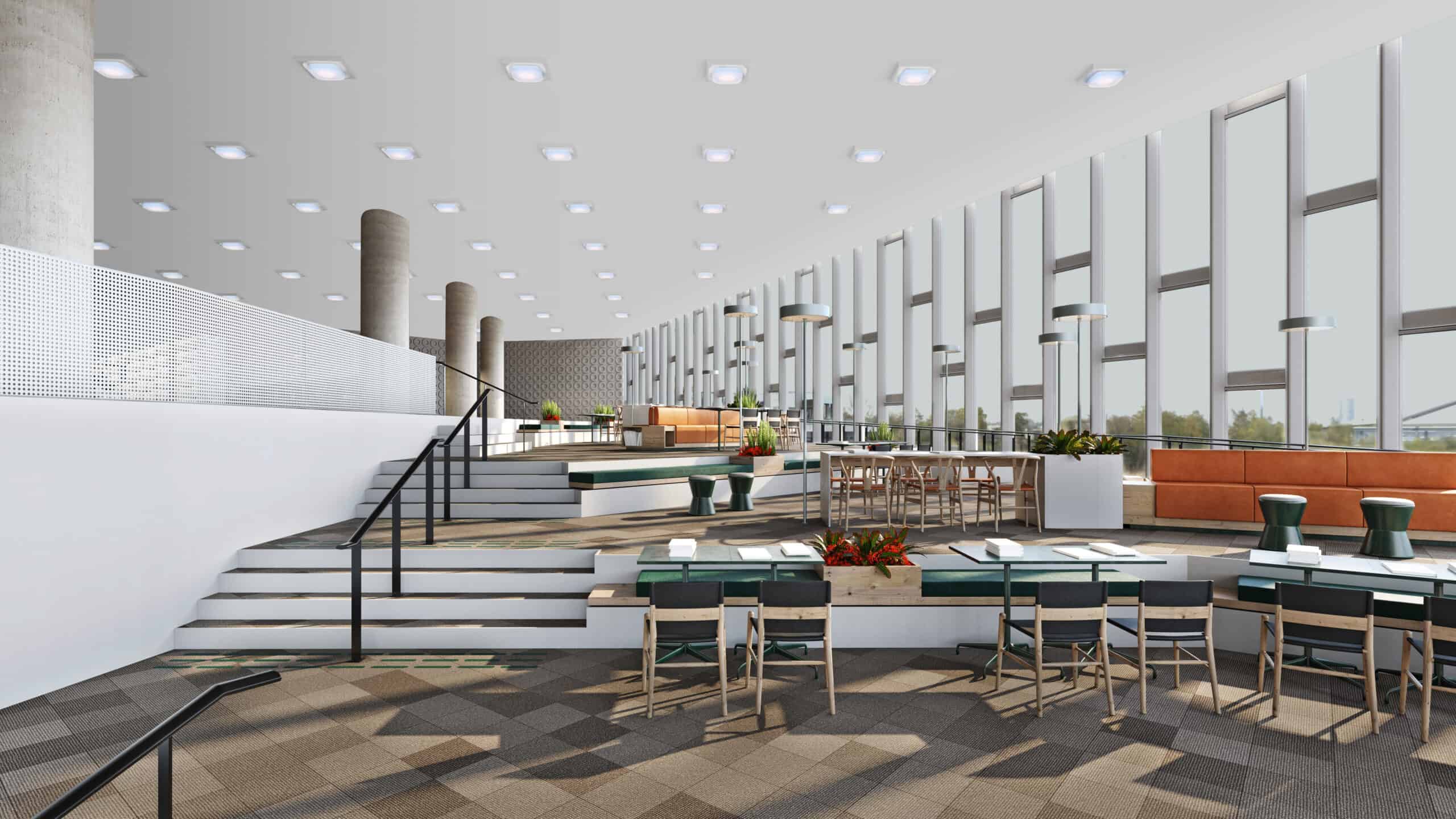
Post-secondary environments show similar strong correlations between blue sky light exposure and classroom performance including faster cognitive processing speed and better concentration (Choi et al. 2019; Mogas-Recalde & Palau 2020; Grant et al. 2021). Improvements are also reported correlated with higher alertness and focus in the college classroom (KHanmohammadi et al. 2016) and better performance on complex drawing tasks in architecture (Emara et al. 2024).
Light and Optimal Time for Academic Performance
Classroom illumination plays a complex role in the timing of academic performance. There seems to be no single “best” time for school studies because performance depends on:
- Age (elementary vs. adolescent)
- Sleep status
- The specific cognitive task being measured
- Circadian phase
- Environmental factors such as light exposure
However, light influences several key factors of student psychophysiology and behavior that affect performance including circadian timing that influences many aspects of motivational state. As a result, research in chronobiology and education has been able to demonstrate that student attention and learning readiness fluctuate predictably throughout the school day (Escribano & Díaz-Morales 2014; Valdez 2019). Attention generally rises through the morning, peaks during the late-morning hours, and declines during the early-afternoon post-lunch period (Table 1).
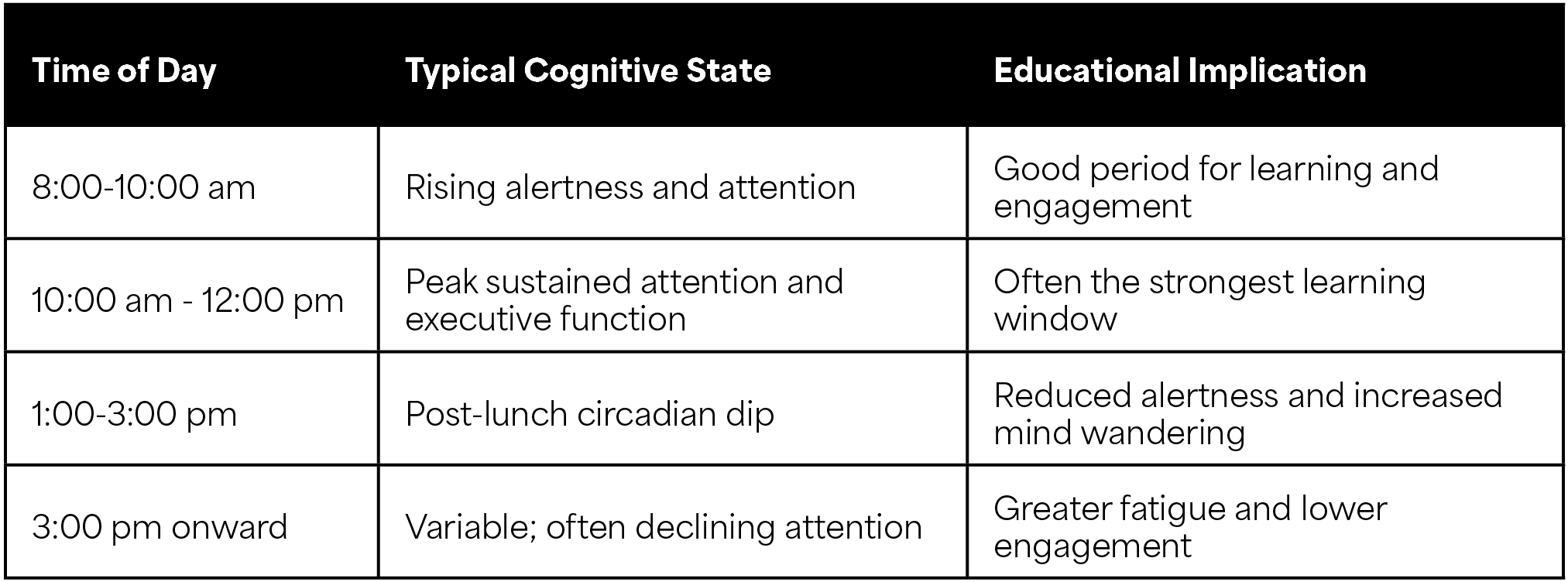
Because light is a primary regulator of alertness and circadian function, biologically effective daylighting or blue-sky-enriched lighting can help support student attention during these critical learning windows.
Adolescents are biologically disadvantaged during early morning classes
Puberty often shifts chronotypes and circadian timing. As a result, adolescents, high school and college students are more vulnerable because of sleep deprivation and circadian mistiming (social jetlag) (Minges & Redeker 1016; Dikker et al. 2020; Goldin et al. 2020). This can result in fundamental deficits to learning and associated academic performance including exam grades (Vicario et al. 2025) and GPA (Yeo et al. 2023).
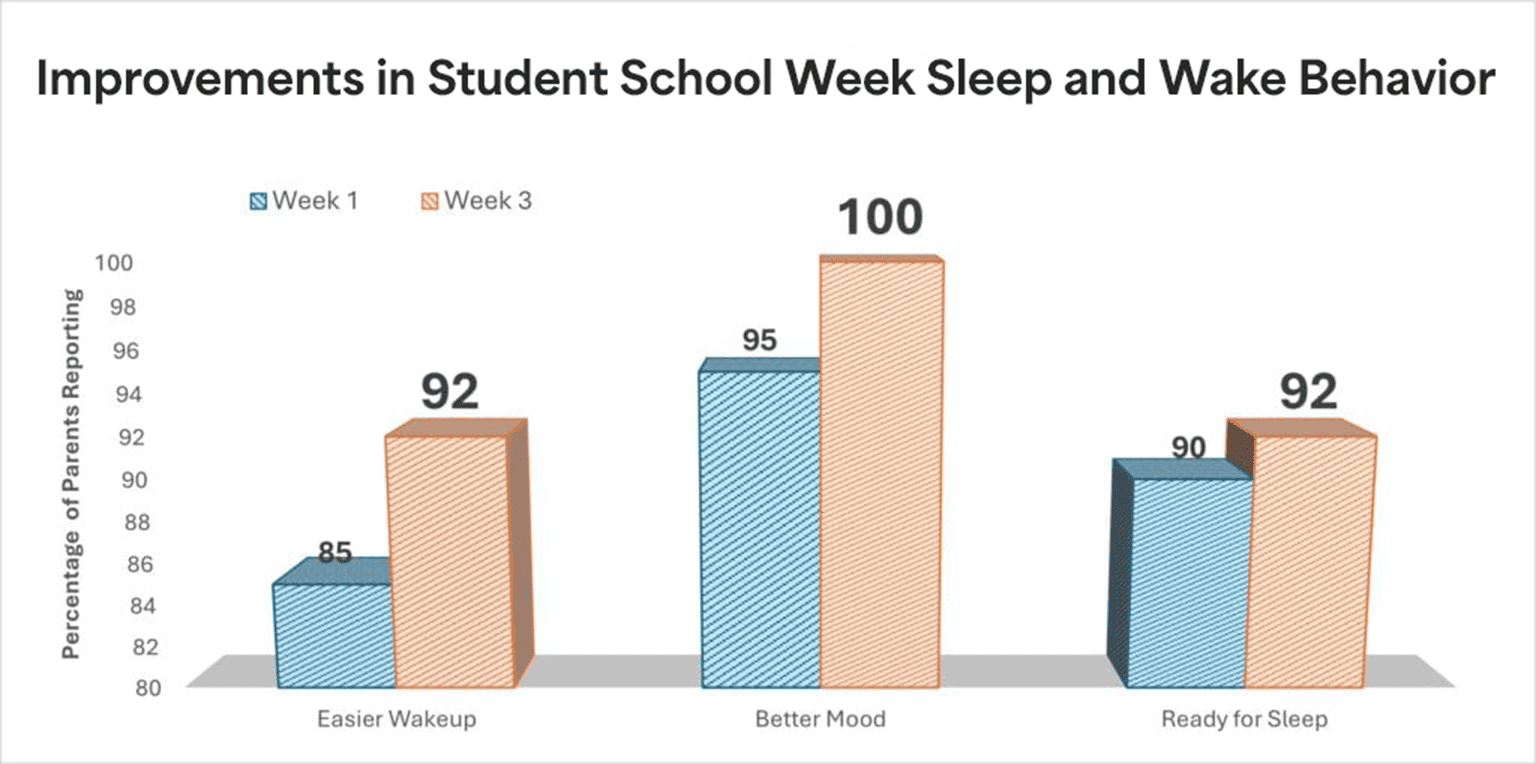
Blue sky light spectra exposure early in the day can help shift circadian daytime earlier and help boost focus and alertness for improved morning period performance. Interestingly, when blue-sky-enriched lamps were installed in student homes, parents reported significant improvements to wake-up, school-time, and bed-time behavior and mood (Figure 1; BIOS 2024).
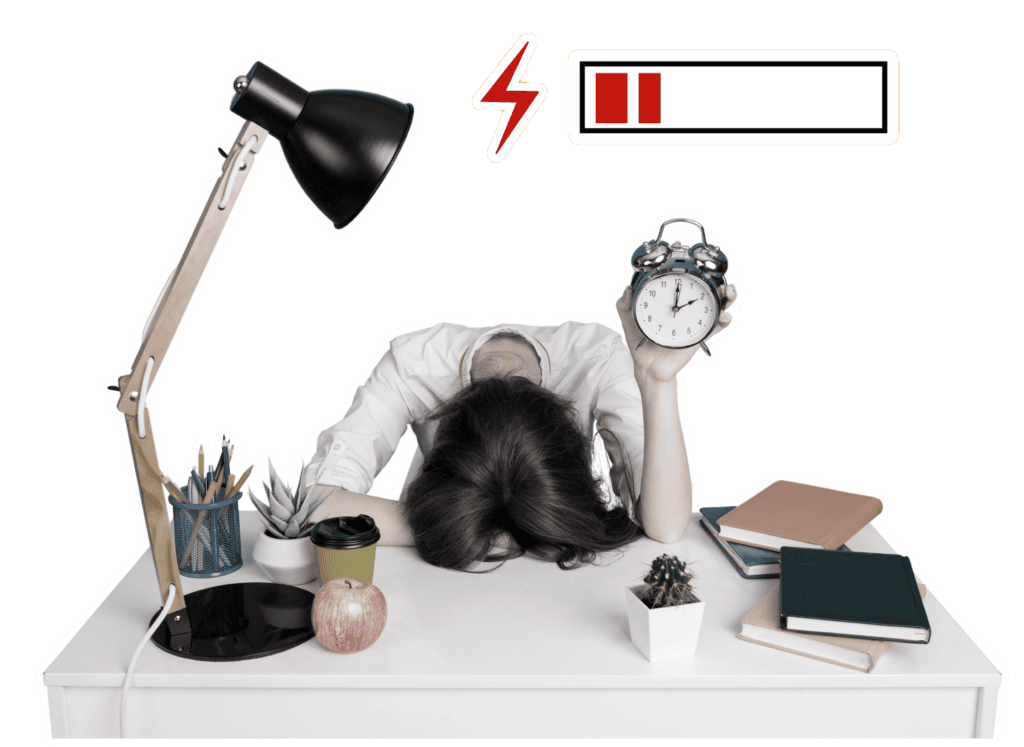
Light and post lunch dip
One of the most reproducible findings in circadian science is the “post-lunch dip,” a decline in alertness typically occurring between approximately 2 PM and 4 PM. Importantly, this phenomenon is linked to circadian biology and not simply food consumption. Natural, bright, or blue-enriched electric light interventions have been shown to dampen this period of impaired classroom performance (Askaripoor et al. 2019; Zhou et al. 2021).
Lighting and Problem-Based or Student-Centered learning
Light exposure has a direct impact on problem-based (PBL) and student-centered (SCL) learning. These demanding learning approaches depend heavily on sustained attention, collaboration, and cognitive flexibility. Studies in educational settings have shown that blue-enriched, daylight-like lighting improves concentration, collaboration, and cognitive performance in students compared with conventional classroom lighting (Mott et al. 2012; Barkmann et al. 2012; Keis et al. 2014). Because active learning approaches require students to generate ideas, solve problems, and interact continuously with peers, classrooms that provide higher levels of biologically effective, blue-sky light may better support the mental stamina and engagement these instructional models demand.
The Current State of Classroom Lighting
"What light through yonder window breaks?"
-William Shakespeare
It typically isn’t enough healthy light throughout the day to optimally support classroom academic performance.
RP-3-20 Educational lighting limitations
ANSI/IES Recommended Practice guidelines for Lighting Educational Facilities state 300-400 Lux @0.76m height AFF with 30-50 Fc on the desk task plane for general classroom lighting. Recommendations are also laid out for various specific facilities and activities. As of 2026, there are no specific recommendations for boosting biologically-relevant light in RP-3. However, the biomedical consensus view on quantifying indoor blue-sky daytime light levels detailed in Brown et al. 2022 was subsequently adopted by ANSI/IES as described in RP-46-25 and is particularly important to educational environments given the impact of higher melanopic light (day and/or electric) on mood, focus, alertness and academic performance. Indeed, there is concern that the lighting practice recommendations do not do enough to encourage the use of human-centric lighting to meet daytime recommendations (Moore-Ede 2026).
The generally poor levels of melanopic light levels in classrooms ‒ published measurements
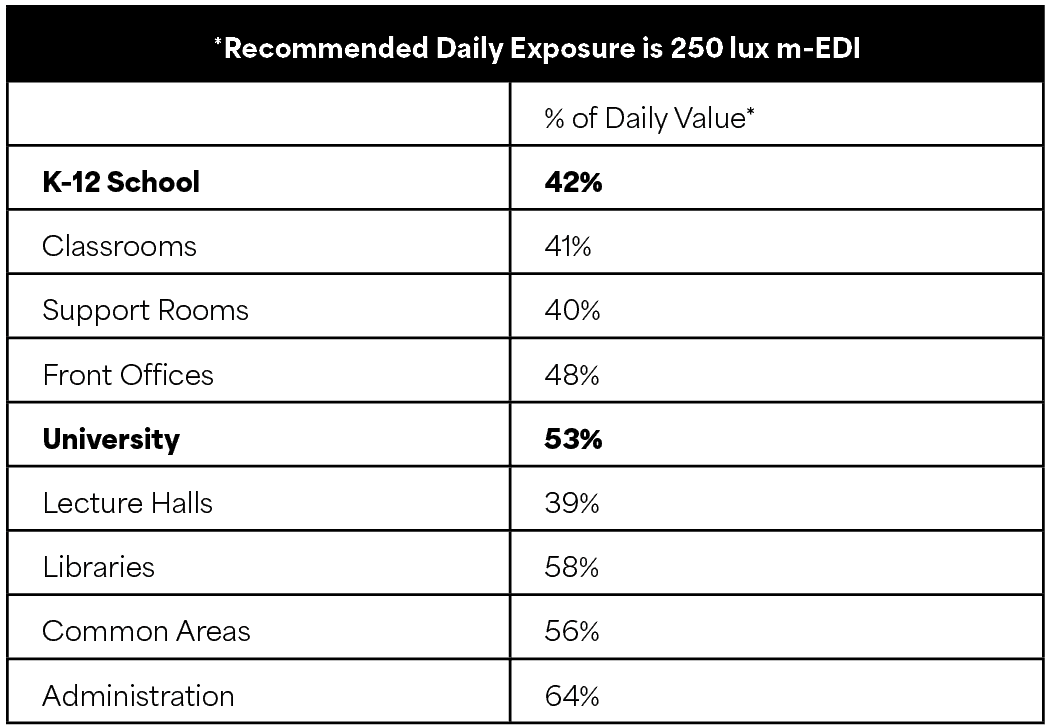
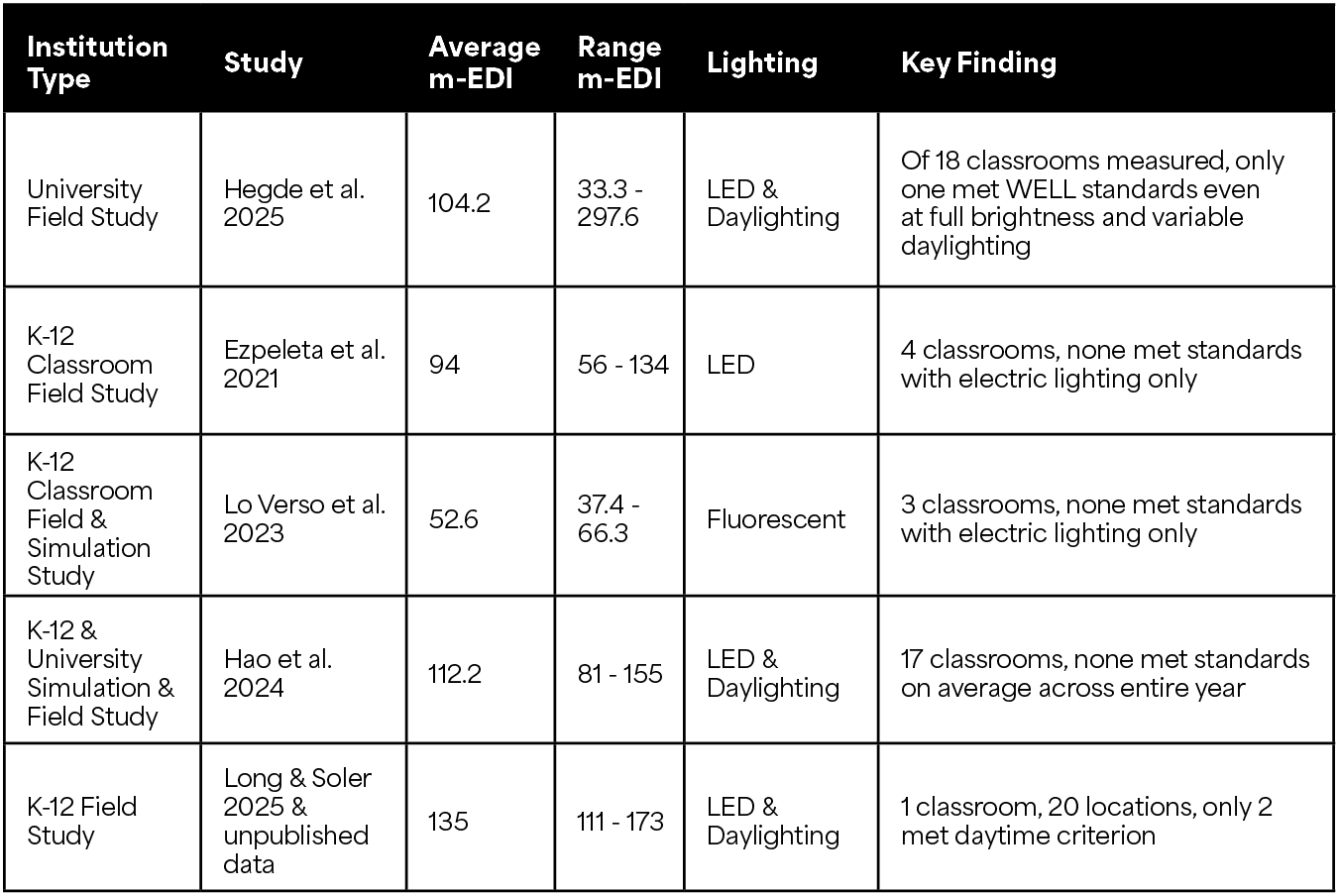
The consensus on blue sky light levels from field and simulation studies shows that there is heterogeneity in healthy light exposure within classrooms, but on average with limited daylighting, levels fall far below the 250 m-EDI needed to support daytime mood, focus, alertness, and circadian function (Table 2).
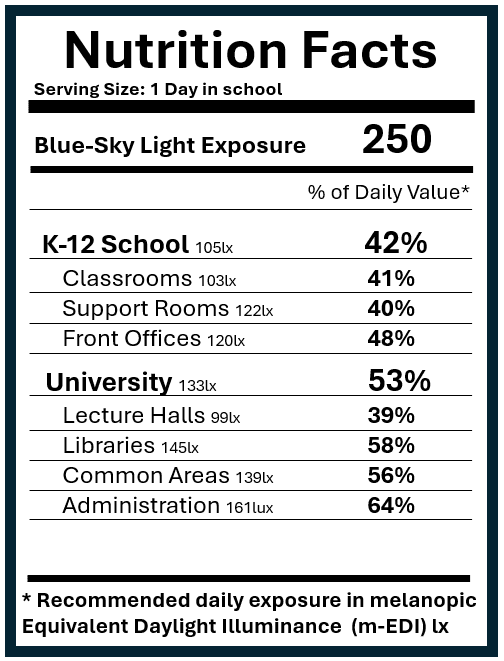
Melanopic Light is Food for Thought
Our extensive measurement of melanopic light in classrooms, lecture halls, libraries, front offices and other study rooms supports the published literature in highlighting the limitations of current general illumination to provide students, teachers, and staff adequate biologically-relevant light. Indeed, if we view healthy blue sky light as an essential nutrient, our schools would provide far less than our recommended daily amount.
"The sky is the daily bread of the eyes"
-Ralph Waldo Emerson
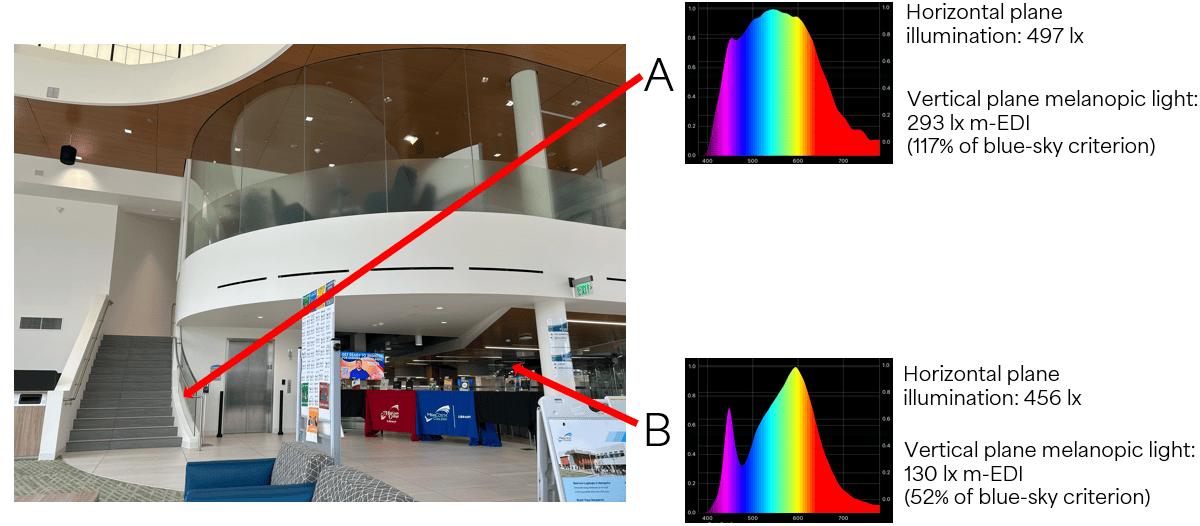
Healthy light exposure often stops at the lobby
Modern school and university buildings often have stunning, high design entrances with spacious interiors and abundant natural light. This extravagant use of natural light often diminishes very quickly as you move through the lobby and into the functional halls of the building (Figure 2A). Blue sky light exposure also diminishes quickly with heavy reliance on electric lighting (Figure 2B).
The Challenge of Optimizing Biologically-Relevant Light Penetration in Classrooms
Combining day and electric lighting to optimize high-melanopic general illumination in classrooms is often more difficult than in offices because classrooms combine several design constraints that work against delivering sufficient light to students’ eyes while maintaining visual comfort, energy efficiency, and instructional effectiveness.
Daylighting in Classrooms
Daylighting often potentially contributes most of the biologically effective light available to students. Indeed, windows are not only the gold standard for healthy lighting but are preferred places to sit by students when given the choice (Angelaki et al. 2022; Angelaki 2025). However, the limitations of daylighting are well documented and are particularly poignant in educational environments. Daylighting often fails to provide adequate melanopic light because:
- Many classrooms have limited window exposure reducing the window-to-wall ratio (WWR)
- Temporal and spatial heterogeneity of daylighting creates uneven student illumination
- Students have a wider range of light and distraction sensitivity prompting shading or louvering
- Modern educational tech (i.e. projectors, interactive displays, large-format screens, whiteboards, etc.) compete with daylight prompting shading or louvering
Despite the value of natural illumination in classrooms, the effective implementation of daylighting continues to be limited. Indeed, a 2024 EdWeek Research Center Survey of 524 K-12 teachers showed that almost 20% of classrooms had no natural light exposure (14% didn’t even have outward facing windows).
One in five teachers said they had daylighting between 1-50% of the school day. Only half of the teachers reported having natural light more than 75% of the day, although overall melanopic effectiveness is likely dampened by environmental or structural constraints discussed above (Prothero 2024).
Glare in Classroom Environments
Students tend to be more sensitive to glare during learning engagements. Glare caused by daylighting has well documented negative consequences in academic performance including math, reading and copying efficiency (Bian et al. 2020; Singh et al. 2020) despite the generally well supported positive correlation between increased classroom illumination and test scores (Heschong 1999; Singh et al. 2020). Strongly side-lit spaces are particularly prone to high contrast, spatial heterogeneity in illumination and glare. Due to the relatively extreme differences in lighting between various seating positions in side-lit classrooms, glare and discomfort models are most predictive if the Daylight Glare Probability (DGP) equations include significantly different components for window and wall zones (Viula et al. 2023).
Such window illuminated classrooms are very common and standard practice in architectural design. The result is often limited use of daylighting in favor of more uniform electric lighting.
"There are two kinds of light‒the glow that illuminates, and the glare that obscures."
-James Thurber
The impact of skylights on classroom illumination
Skylights, windows, or a combination of both seem like a reasonable approach to providing adequate melanopic light into classrooms and various configurations of skylights or high transom windows are utilized in modern classroom design. Indeed, Heschong’s (1999) study of several school districts showed an intriguing positive relationship between academic performance and daylighting, window area, and skylight area (Figure 3).
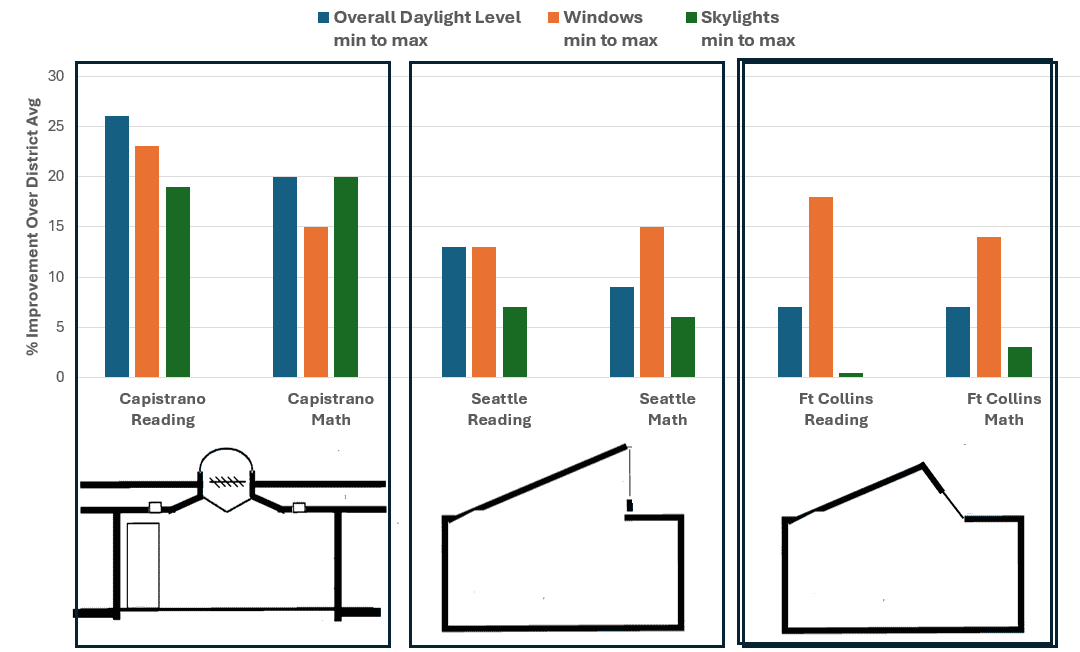
In subsequent analyses and field interviews with teachers, the relationship between skylight exposure and performance and its causation are not as clear (Heschong & Mahone 2003). It seems reasonable that brighter classroom environments correlate to better student behavior and outcomes. They are clearly preferred by students, teachers, and architects. However, increased classroom daylighting almost always comes with increased glare that leads to countermeasures.
Teachers report challenges with glare, uneven lighting, and thermal issues that result in significant shading or louvering. Heschong et al. found even on a partly sunny winter day in Colorado, 60% of the classrooms in the study district had their shades closed (Heschong et al. 2002). This aligns well with our own field observations in southern California between fall 2025-spring 2026 where we found over 71 % mostly or complete window and skylight shading in K-12 and university classrooms, study areas, and libraries resulting in a substantial loss of blue sky light (Figure 4). These areas also have window tinting reducing visible light transmission (VLT) by 30-50%.
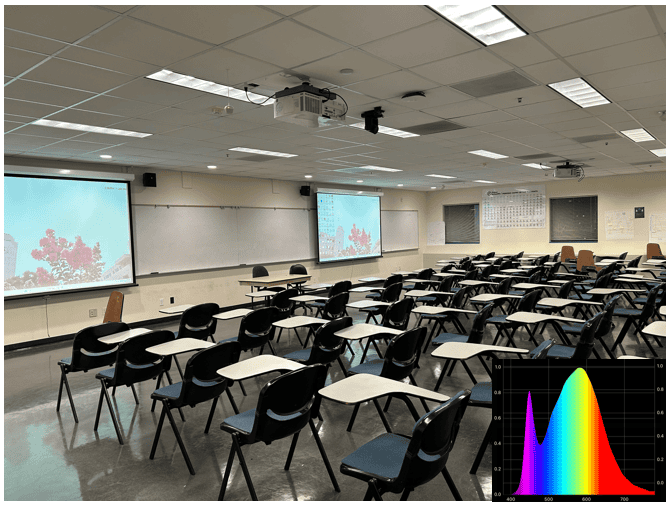
220 lux task plane
138 lux m-EDI (face plane @ 4ft AFF)
55% of blue sky criterion
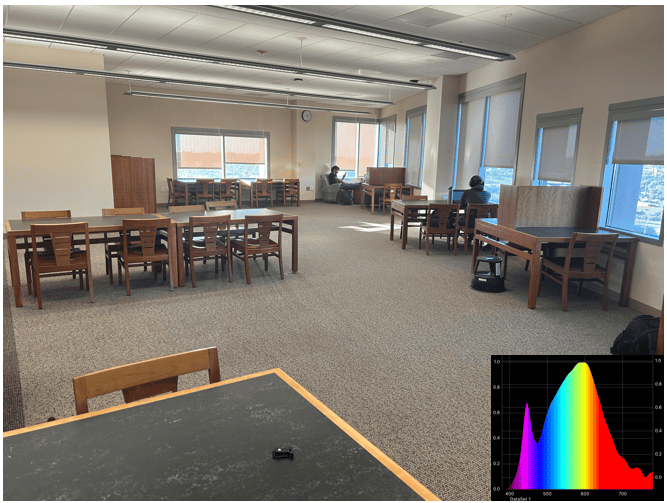
801 lux task plane
171 lux m-EDI (face plane @ 4ft AFF)
55% of blue sky criterion
Figure 4. Typical midday shading of windows in university classrooms (A) and library study areas (B) resulting in high contribution of LED electric light (see inset SPDs) to the ambient illumination versus daylighting. Note the contrast between the bright task plane illumination and the insufficient melanopic light based on RP-46-25 recommendations for ≥250 lx m-EDI daytime exposure.
Light wells and the challenge of blue sky line-of-site
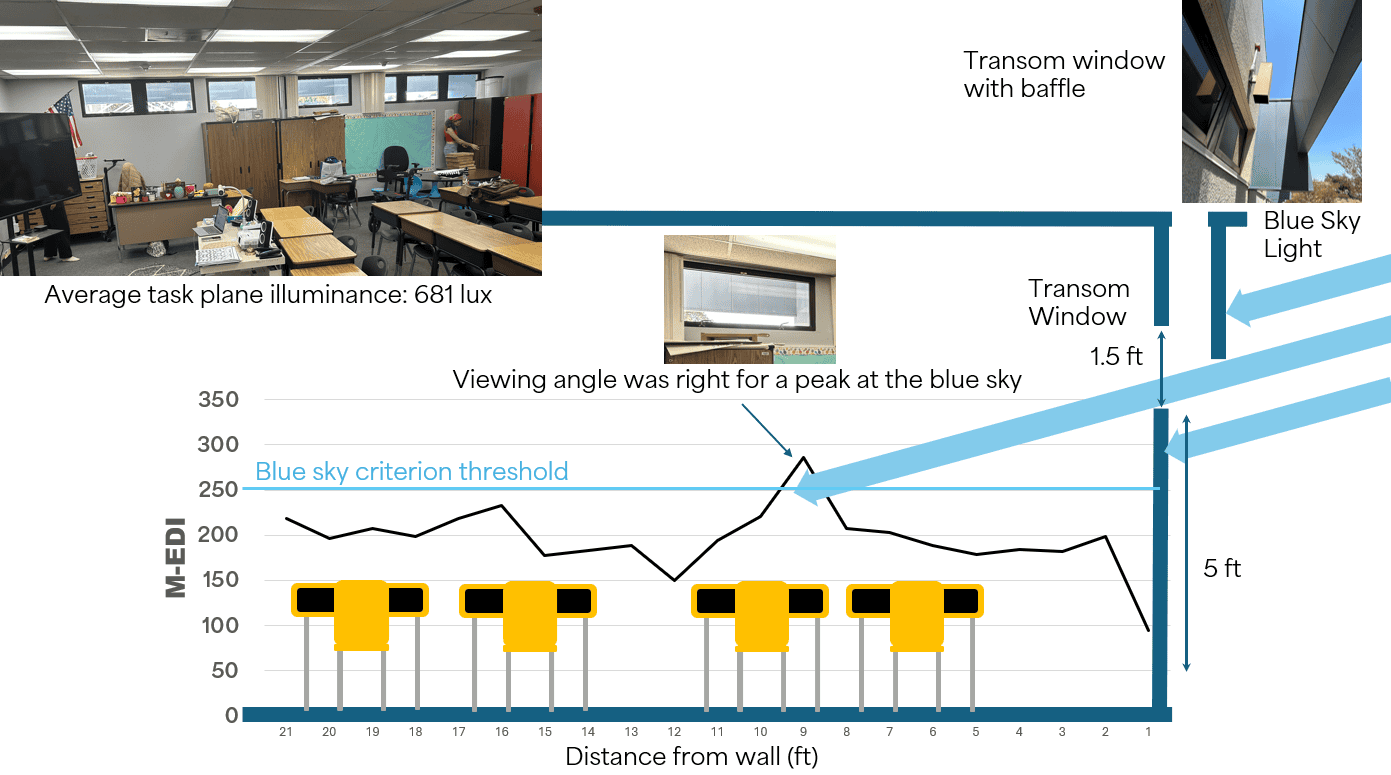
Light wells, light shelves, tubular daylighting, and window baffles are a popular and effective way to maximize daylighting illumination while minimizing glare (Dahlan & Eissa 2015; Mesloub et al. 2026). The indirect path that light takes into the classroom maintains ample and diffuse illumination providing substantial task plane illumination. Significant loss of light intensity through material absorption is typically acceptable, if not preferred, when just considering ambient task plane illumination. However, the amount of blue sky light (cyan peak 490nm) is only a fraction of the overall spectral power distribution meaning that the loss to biologically-relevant melanopic light is significant.
Our research shows that exposure to healthy blue sky light indoors is sensitive to line-of-sight. Simply put: if you can see some blue sky in your view, you are likely getting close to adequate melanopic light as per RP-46-25 recommendations. Light baffling reduces available blue sky light in classrooms and creates significant variation in who receives it often resulting in wide areas of poor student coverage (Figure 5).
Classroom surfaces impact on melanopic light
Classroom blue sky light is also impacted by surface absorption. Classrooms, especially at the elementary level often have darker or more colorful surfaces that impact available melanopic light. In comparisons of incident and reflected light on typical surfaces in classrooms, we found both photopic and melanopic light levels absorbed by as much as 95% (Figure 6). In published lighting simulations, the effective melanopic light as measured by the ratio of visible to melanopic light (m-DER) is decreased by an average of 22.5% due to absorption of classroom materials (Lo Verso et al. 2023).
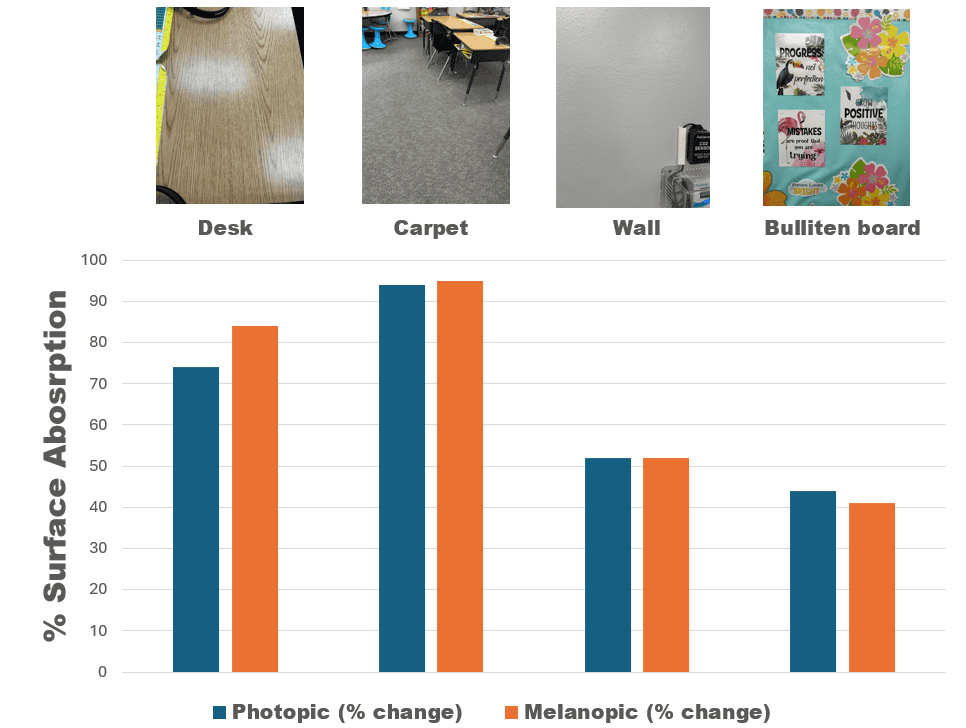
Other common materials of biophilic design such as wood-tone or natural surfaces and plants differentially absorb blue spectra, further decreasing available melanopic light in the classroom. In field measures and simulations, light wood surfaces, typical of student desks significantly dampen melanopic signals below minimum RP-46 criteria regardless of window dimensions or orientation (Acosta et al. 2019).
The unique challenges of student and teacher responses to classroom light
The research suggests that students and staff generally value daylight, but only when it remains visually balanced and compatible with learning tools and prolonged focus demands (Aram & Alibaba 2025; García-Fernández & Bonilla 2026). Many classrooms have multiple functions and must accommodate desk and furniture reconfigurations frequently to support various individual and group learning activities. This dynamic nature of the teaching environment makes the heterogeneity caused by daylighting and electric lights particularly distracting for teachers and students. Field observations and interviews reveal that teachers regularly shade or block windows and add colored tinting shades to overhead fixtures to dampen the uneven illumination or glare (Figure 7).
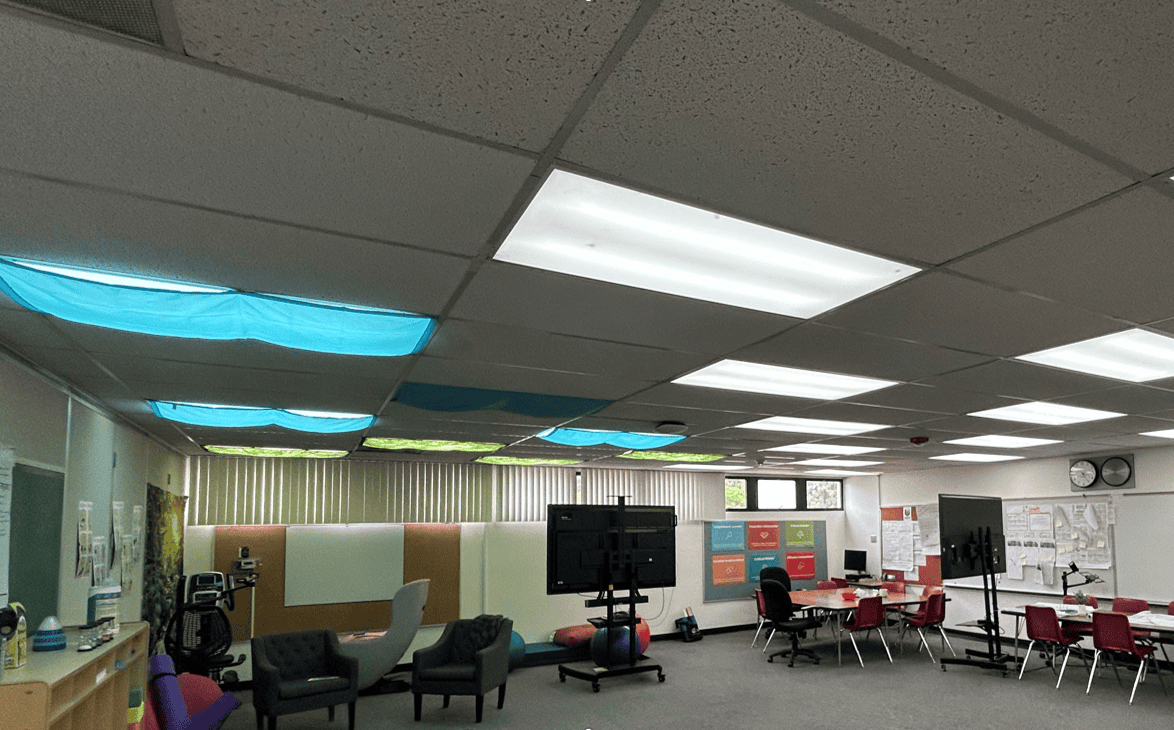
Students often choose areas or perform better with more light for reading (Wang et al. 2025) and collaborative activities (Zoubi et al. 2024) but not so for computer work (Fang et al. 2022). Daylighting is often then suppressed in practice and there is a strong need for uniform, higher CCT general illumination in classrooms where the light levels can be independently controlled by the instructor. erentially absorb blue spectra, further decreasing available melanopic light in the classroom. In field measures and simulations, light wood surfaces, typical of student desks significantly dampen melanopic signals below minimum RP-46 criteria regardless of window dimensions or orientation (Acosta et al. 1019).
Early Experiments with Blue-Enriched Classroom Lighting
Interest in blue-enriched classroom lighting emerged in the early 2000s as researchers began investigating “full spectrum” light’s influence on behavior, alertness, and learning. While early classroom studies demonstrated that blue-enriched lighting could improve concentration, alertness, and cognitive performance, researchers also discovered important limitations. Keis et al. (2014) reported significant improvements in student alertness and cognitive performance under blue-enriched classroom lighting, yet approximately half of the students perceived the environment as excessively bright.
Similarly, researchers found that many classrooms suffered from glare and visual discomfort caused by excessive brightness, daylight reflections, and poorly controlled lighting systems (Winterbottom & Wilkins 2009). Later research showed that increasing correlated color temperature alone does not necessarily improve visual comfort, with some students preferring moderate CCT environments over cooler, bluer lighting (Yang & Jeon 2020). Together, these studies suggest that successful circadian lighting design requires more than simply increasing blue light or intensity. An improved approach is needed to deliver biologically effective light to the eye while maintaining visual comfort and minimizing glare.
Thought on healthier classroom lighting has progressed as follows:
Phase 1 (1980’s-2010): “Daylighting is good but limited”
Phase 2 (2005–2015): “Blue-enriched lighting or daylighting measurably improve performance.”
Phase 3 (2010–2020): “Raising CCT and brightness can increase blue light but also create comfort issues that must be mitigated or tolerated.”
Phase 4 (2015-2025): “LED color tuning and increased brightness can deliver more blue-enriched light but comfort and energy consumption issues limit the ability to achieve RP-46-25 healthy lighting recommendations for much of the school day”
Phase 5 (2025-today): “The goal is uniform lighting with high melanopic stimulus delivered efficiently to the eye consistently, without the glare, excessive brightness, and energy penalties associated with earlier approaches.”
SkyView™‒ The Next Generation in Blue Sky Lighting for Educational Institutions
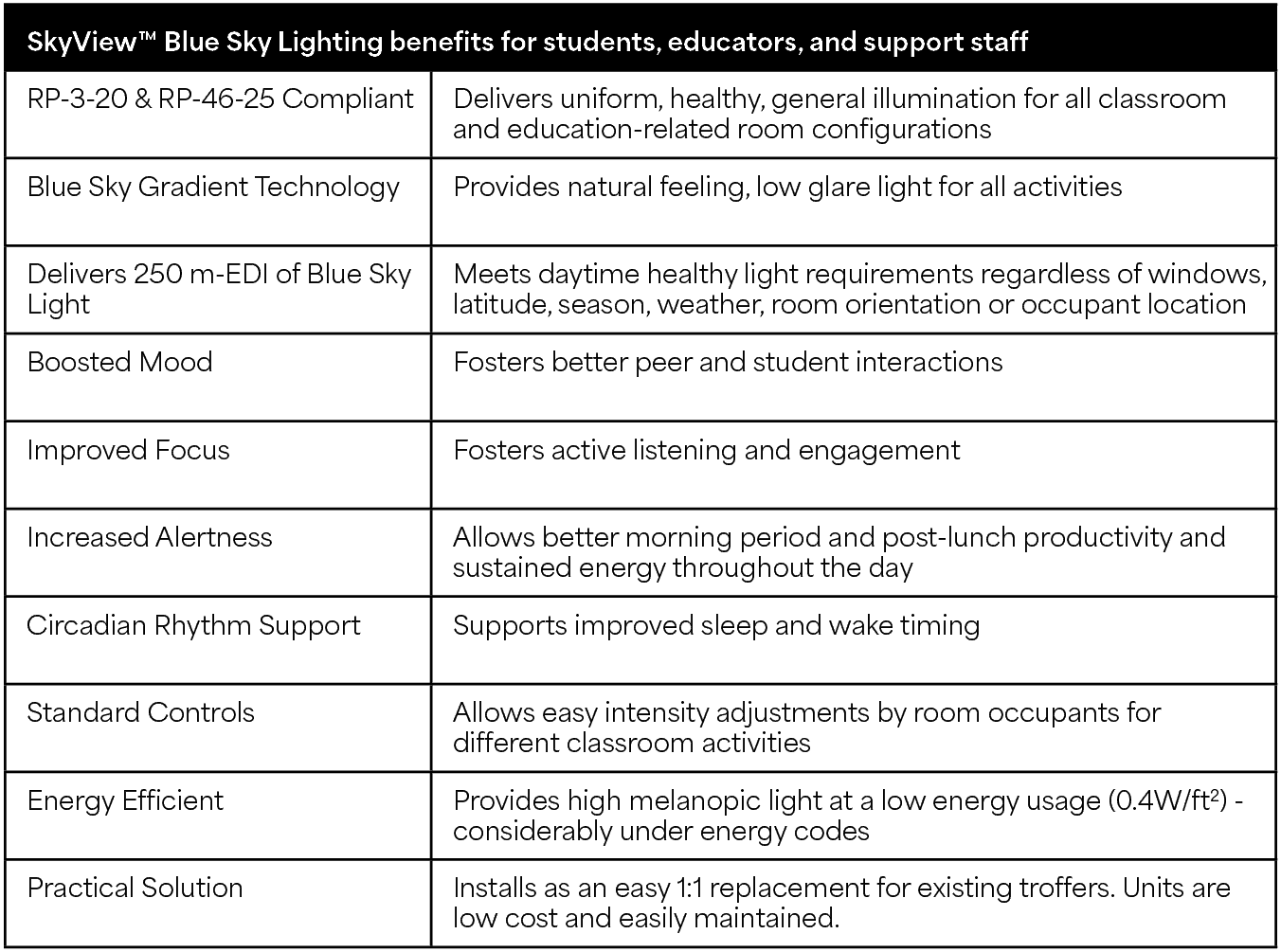
The next generation of classroom lighting must go beyond illuminating desks to support the biological needs of students and staff while maintaining visual comfort. Demonstrated in field and clinical studies (Soler & Long 2025), SkyView™ by BIOS Lighting provides the healthy blue sky light needed to support mood, focus, alertness, and circadian health.
SkyView™ achieves this through patented Blue Sky Gradient Technology, which delivers biologically-effective blue sky light from high angles directly to the eyes while projecting warmer, lower-angle light onto learning surfaces.
This approach helps provide the melanopic stimulus needed for academic performance without the excessive brightness and glare often associated with strong daylighting or traditional, blue-enriched lighting systems. The unique illumination eliminates strong down lighting to reduce harsh shadows improve facial modeling to better support communication, collaboration, and student engagement. The fixtures are simple to install and easily automated or controlled by the teacher.
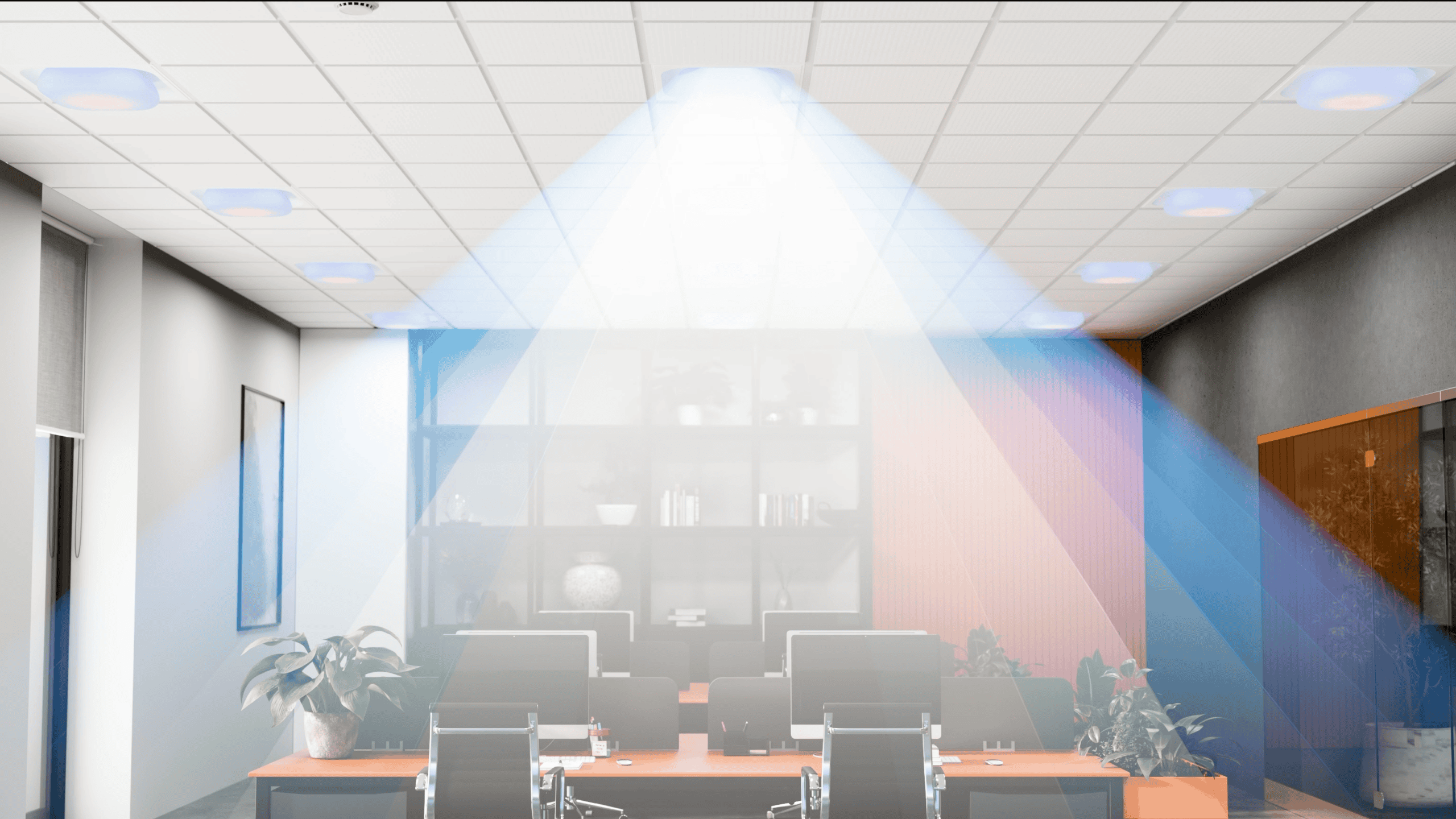
Classroom illumination with SkyView™ Tile versus standard LED
We used the Blue Sky Estimator program to model the electric light contribution in an actual K-5 classroom we have previously measured. The 20×30 foot room with 8 foot high ceilings (RCR 2.29) and typical surface reflectances was illuminated with CRI 90 lights that put 340 lux on the target task plane. The Estimated blue sky light (m-EDI) using recessed troffer LED lights at 4500K was 75.8 lux (Figure 8A). This provided only 30.3% of the daytime blue sky criterion that would support mood, focus, and alertness in the classroom. In the same classroom configuration under SkyView™ Tile providing 5300K but with spatial color separation, the result is an estimated 250.6 lux m-EDI that meets the daytime criterion (Figure 8B).
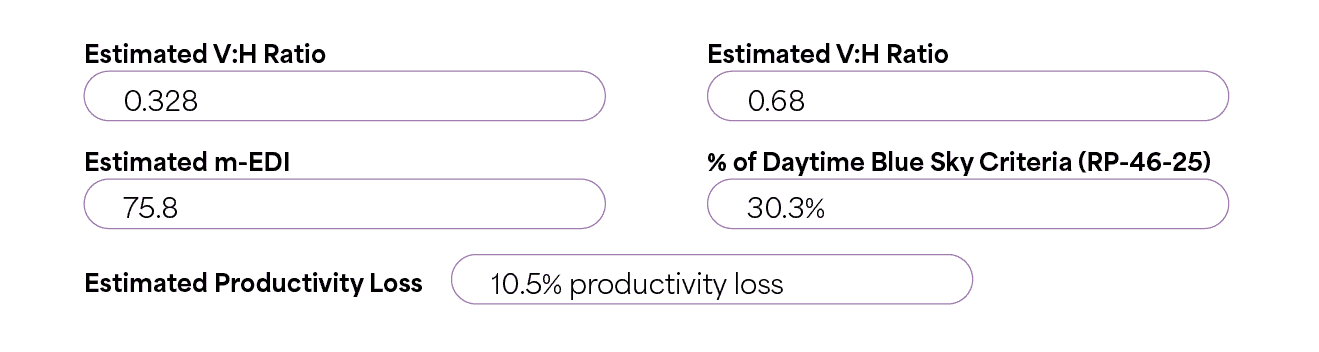
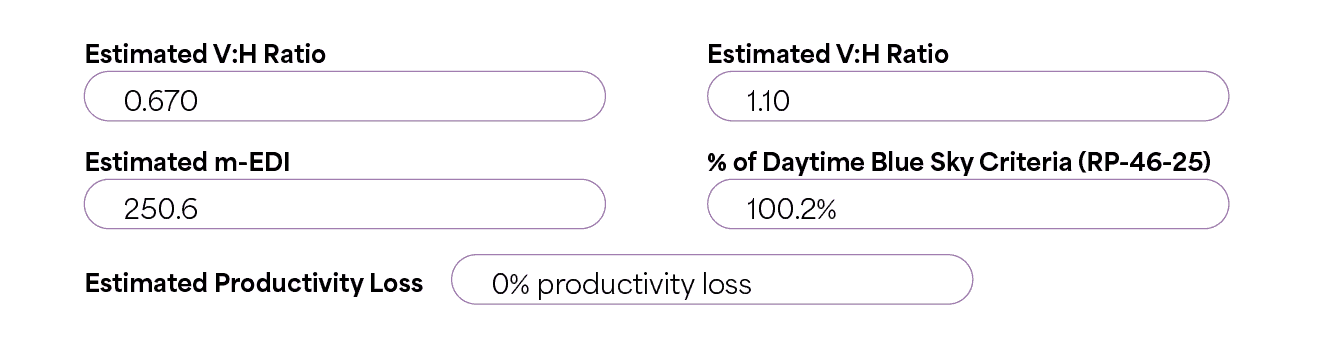
Figure 8. Blue Sky Estimator comparison of melanopic light in a classroom under standard LED lighting (A) versus SkyView™ Tile (B).
Conclusions on Improved Blue Sky Light in Educational Environments
By working with daylighting to create a more natural balance of light within the classroom, SkyView™ tile and linear pendant is the most practical approach to healthy illumination for all educational spaces and activities. The result is healthy lighting for healthy minds.
SkyView™ brings the benefits of a blue sky day indoors to help educational institutions create environments where students and staff can learn, focus, and perform at their best.
"I never get tired of the blue sky."
-Vincent Van Gogh
Literature Cited
Acosta I, Campano MÁ, Leslie R, Radetsky L. Daylighting design for healthy environments: Analysis of educational spaces for optimal circadian stimulus. Solar Energy. 2019 Nov 15;193:584-96. https://doi.org/10.1016/j.solener.2019.10.004
Angelaki S. Lighting for educational spaces: Designing spatial lighting distribution for school classrooms (Doctoral dissertation, KTH Royal Institute of Technology). https://www.diva-portal.org/smash/record.jsf?pid=diva2:2009371
Angelaki S, Triantafyllidis GA, Besenecker U. Lighting in kindergartens: Towards innovative design concepts for lighting design in kindergartens based on children’s perception of space. Sustainability. 2022 Feb 17;14(4):2302. https://doi.org/10.3390/su14042302
ANSI / IES RP-3-20 Recommended Practice: Lighting Educational Facilities. Illuminating Engineering Society. 2020. https://store.ies.org/product/rp-3-20-recommended-practice-lighting-educational-facilities/?v=0b3b97fa6688
Aram R, Alibaba HZ. Daylight, glare, and student study behavior in a university library a mixed methods case study at Eastern Mediterranean University. Journal of Architectural and Planning Research. 2025 Jun 1;39(1):3. https://lockescience.press/articles/japr/2025/issue%201/paper%201.pdf
Askaripoor T, Motamedzade M, Golmohammadi R, Farhadian M, Babamiri M, Samavati M. Effects of light intervention on alertness and mental performance during the post-lunch dip: a multi-measure study. Industrial health. 2019;57(4):511-24. https://doi.org/10.2486/indhealth.2018-0030
Baloch RM, Nichole Maesano C, Christoffersen J, Mandin C, Csobod E, de Oliveira Fernandes E, Annesi-Maesano I, Sinphonie Consortium. Daylight and school performance in European schoolchildren. International journal of environmental research and public health. 2021 Jan;18(1):258. https://doi.org/10.3390/ijerph18010258
Barkmann C, Wessolowski N, Schulte-Markwort M. Applicability and efficacy of variable light in schools. Physiology & behavior. 2012 Feb 1;105(3):621-7. https://doi.org/10.1016/j.physbeh.2011.09.020
Bian Y, Dai Q, Ma Y, Liu L. Variable set points of glare control strategy for side-lit spaces: Daylight glare tolerance by time of day. Solar Energy. 2020 May 1;201:268-78. 10.1016/j.solener.2020.03.016
BIOS. Circadian Lighting Improves child sleep transitions and mood – The Parent Study. 2024. https://bioslighting-skyview.com/circadian-lighting-improves-child-sleep-transitions-and-mood-the-parent-study/
Choi K, Shin C, Kim T, Chung HJ, Suk HJ. Awakening effects of blue-enriched morning light exposure on university students’ physiological and subjective responses. Scientific reports. 2019 Jan 23;9(1):345. https://doi.org/10.1038/s41598-018-36791-5
Dahlan AS, Eissa MA. The impact of day lighting in classrooms on students’ performance. International Journal of soft computing and engineering (IJSCE). 2015;4(6):7-9. https://publication-cpas-egypt.com/wp-content/uploads/2024/02/2015-The-Impact-of-Daylighting-in-Classrooms.pdf
Dikker S, Haegens S, Bevilacqua D, Davidesco I, Wan L, Kaggen L, McClintock J, Chaloner K, Ding M, West T, Poeppel D. Morning brain: Real-world neural evidence that high school class times matter. Social Cognitive and Affective Neuroscience. 2020 Nov 1;15(11):1193-202. https://doi.org/10.1093/scan/nsaa142
Emara ME, Mayhoub MS, El Sherief AE, Abo Mahmoud H. Daylighting impact on student academic performance in higher education buildings-the case of the architecture department. Journal of Al-Azhar University Engineering Sector. 2024 Apr 1;19(71):826-42. https://journals.ekb.eg/article_352841.html
Escribano C, Díaz-Morales JF. Daily fluctuations in attention at school considering starting time and chronotype: an exploratory study. Chronobiology international. 2014 Jul 1;31(6):761-9. https://doi.org/10.3109/07420528.2014.898649
Fang Y, Liu C, Zhao C, Zhang H, Wang W, Zou N. A study of the effects of different indoor lighting environments on computer work fatigue. International Journal of Environmental Research and Public Health. 2022 Jun 3;19(11):6866. https://doi.org/10.3390/ijerph19116866
García-Fernández B, Bonilla JF. Smart Lighting Integration in Educational Buildings: A Climate-Responsive and User-Centred Framework for Classroom Retrofit. Environments. 2026 May 29;13(6):306. https://oa.upm.es/96422/1/environments-13-00306-v2.pdf
Goldin AP, Sigman M, Braier G, Golombek DA, Leone MJ. Interplay of chronotype and school timing predicts school performance. Nature Human Behaviour. 2020 Apr;4(4):387-96. https://doi.org/10.1038/s41562-020-0820-2
Grant LK, Kent BA, Mayer MD, Stickgold R, Lockley SW, Rahman SA. Daytime exposure to short wavelength-enriched light improves cognitive performance in sleep-restricted college-aged adults. Frontiers in neurology. 2021 Feb 22;12:624217. https://doi.org/10.3389/fneur.2021.624217
Hao H, Xu J, Schlangen LJ. Evaluation and optimization of annual light variations for visual and non-visual effects within a ground-floor middle school classroom. Journal of Building Engineering. 2024 Dec 1;98:111293. https://doi.org/10.1016/j.jobe.2024.111293
Hegde AL, Tyne IA, Adi MN. Visual and non-visual classroom lighting in a large university–A case study. Building and Environment. 2025 Aug 7:113531. https://doi.org/10.1016/j.buildenv.2025.113531
Heschong, L. (1999). Daylighting in Schools: An Investigation into the Relationship between Daylighting and Human Performance. Detailed Report. https://eric.ed.gov/?id=ED444337
Heschong L, Mahone D. Windows and classrooms: A study of student performance and the indoor environment. California Energy Commission. 2003 Oct;37(4):414-35. https://www.aceee.org/files/proceedings/2004/data/papers/SS04_Panel7_Paper01.pdf
Heschong L, Wright RL, Okura S. Daylighting impacts on human performance in school. Journal of the Illuminating Engineering Society. 2002 Jul 1;31(2):101-14. https://www.tandfonline.com/doi/pdf/10.1080/00994480.2002.10748396
Kamal Zoubi M, ALQAMAZ S, Mohammad ISSA M. The influence of light colour temperatures on interior design student performance in classroom studios. Civil Engineering and Architecture. 2024. 12(1):61-69. https://doi.org/10.13189/cea.2024.120105
Keis O, Helbig H, Streb J, Hille K. Influence of blue-enriched classroom lighting on students׳ cognitive performance. Trends in Neuroscience and Education. 2014 Sep 1;3(3-4):86-92. https://doi.org/10.1016/j.tine.2014.09.001
KHanmohammadi M, Masoudinejad M, Alirezaie B. Improving student performance by proper utilization of daylight in educational environments (Case study: IUST School of Architecture). Acta Technica Napocensis: Civil Engineering & Architecture. 2016 Jan 1;59(1). https://oldconstructii.utcluj.ro/ActaCivilEng/download/atn/ATN2016(1)_1.pdf
Kytka BI. Measuring the effect of pro-cognitive light on the performance of secondary school students. 2020. https://www.iqrfalliance.org/case_studies_files/eng-cvut-uceeb-final-research-summary-pro-cognitive-lighting-study-gnp-30-6-2020-brief.pdf
Lekan-Kehinde M, Asojo AB. Impact of lighting on children’s learning environment: a literature review. WIT Trans. Ecol. Environ. 2021 Dec 13;253:371-80. https://www.witpress.com/Secure/elibrary/papers/SC21/SC21031FU1.pdf
Lo Verso VR, Giovannini L, Valetti L, Pellegrino A. Integrative lighting in classrooms: preliminary results from simulations and field measurements. Buildings. 2023 Aug 22;13(9):2128. https://doi.org/10.3390/buildings13092128
Long K and Soler R. Bright students – dark classrooms – why healthier school lighting matters. BIOS. 2025 https://bioslighting-skyview.com/bright-students-dark-classrooms-why-healthier-school-lighting-matters/
Meng X, Zhang M, Wang M. Effects of school indoor visual environment on children’s health outcomes: A systematic review. Health & Place. 2023 Sep 1;83:103021. https://doi.org/10.1016/j.healthplace.2023.103021
Mesloub A, Alnaim MM, Hafnaoui R, Ghosh A. Hybrid daylighting strategies for deep classroom space: integrating horizontal light shelves and tubular daylighting devices in hot arid climates. Energy and Buildings. 2026 Feb 15:117167. https://doi.org/10.1016/j.enbuild.2026.117167
Minges KE, Redeker NS. Delayed school start times and adolescent sleep: a systematic review of the experimental evidence. Sleep medicine reviews. 2016 Aug 1;28:86-95. https://doi.org/10.1016/j.smrv.2015.06.002
Mogas-Recalde J, Palau R. Classroom lighting and its effect on student learning and performance: Towards smarter conditions. InLudic, co-design and tools supporting smart learning ecosystems and smart education: Proceedings of the 5th International Conference on Smart Learning Ecosystems and Regional Development 2020 Sep 10 (pp. 3-12). Singapore: Springer Singapore.
Moore-Ede, M. Lighting Industry Attempts to Minimize the Need for Circadian Lighting. 2026 Feb 17. Accessed June 6 2026. https://inside.lighting/news/26-05/lighting-people-remain-divided-over-human-centric-lighting
Mott MS, Robinson DH, Walden A, Burnette J, Rutherford AS. Illuminating the effects of dynamic lighting on student learning. Sage Open. 2012 May 6;2(2):2158244012445585. https://doi.org/10.1177/2158244012445585
Mott MS, Morse R, Saltzman L, Robinson DH. What Can Blue Do for You? LED Lighting with Longer Blue Wavelength Spectral Concentration Increases Student Reading Performance. Educational Research: Theory and Practice. 2025;36(2):1-2. https://eric.ed.gov/?id=EJ1476924
Singh P, Arora R, Goyal R. Impact of Lighting on Performance of Students in Delhi Schools. Indoor Environmental Quality. 2020:95. https://doi.org/10.1007/978-981-15-1334-3_11
Soler R, Long K. Boosting blue sky light indoors reveals fundamental drivers of office productivity. BIOS. October 2025. https://bioslighting-skyview.com/boosting-productivity-with-blue-sky-lighting/
Valdez P. Circadian rhythms in attention. The Yale journal of biology and medicine. 2019 Mar 25;92(1):81. https://pmc.ncbi.nlm.nih.gov/articles/PMC6430172/
Vicario CM, Nitsche MA, Lucifora C, Perconti P, Salehinejad MA, Tomaiuolo F, Massimino S, Avenanti A, Mucciardi M. Timing matters! Academic assessment changes throughout the day. Frontiers in psychology. 2025 Jul 24;16:1605041. https://doi.org/10.3389/fpsyg.2025.1605041
Viula R, Bokel R, Tenpierik M. Prediction of discomfort from glare from daylight in classrooms. Lighting Research & Technology. 2023 Nov;55(7-8):712-29. https://doi.org/10.1177/14771535231173291
Wang M, Guo N, Liu Y, Fu Y, Zhou X. Lighting effects on visual and cognitive adaptation in multimedia classrooms: a multimodal neurophysiological study. Building and Environment. 2025 Sep 11:113687. https://doi.org/10.1016/j.buildenv.2025.113687
Winterbottom M, Wilkins A. Lighting and discomfort in the classroom. Journal of environmental psychology. 2009 Mar 1;29(1):63-75. https://doi.org/10.1016/j.jenvp.2008.11.007
Yang W, Jeon JY. Effects of correlated colour temperature of LED light on visual sensation, perception, and cognitive performance in a classroom lighting environment. Sustainability. 2020 May 15;12(10):4051. https://doi.org/10.3390/su12104051
Yeo SC, Lai CK, Tan J, Lim S, Chandramoghan Y, Tan TK, Gooley JJ. Early morning university classes are associated with impaired sleep and academic performance. Nature Human Behaviour. 2023 Apr;7(4):502-14. https://doi.org/10.1038/s41562-023-01531-x
Zhou Y, Chen Q, Luo X, Li L, Ru T, Zhou G. Does bright light counteract the post-lunch dip in subjective states and cognitive performance among undergraduate students?. Frontiers in public health. 2021 Jun 7;9:652849. https://doi.org/10.3389/fpubh.2021.652849