
Why Are Many Students Not Ready to Learn in the Morning?
Not all students arrive at school equally prepared for learning and that may depend on their light exposure. As children enter adolescence, their biological clocks naturally shift later, causing many middle school, high school, and college students to feel sleepy during early morning classes.
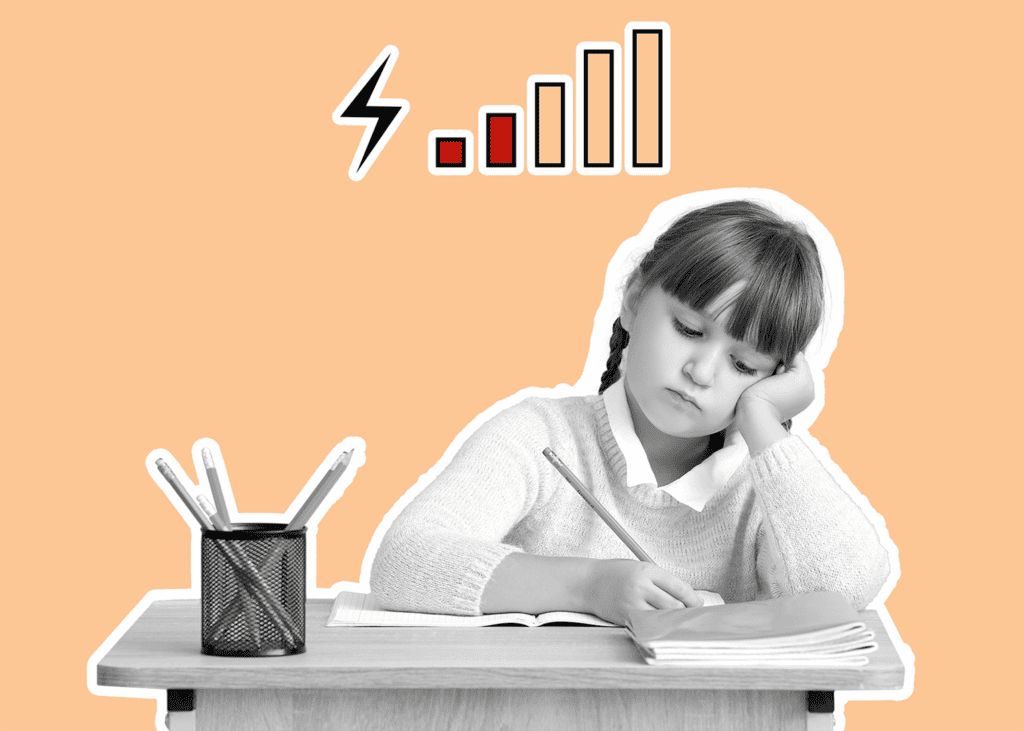
Researchers have shown that this mismatch between school schedules and student circadian timing can reduce alertness, increase daytime sleepiness, and negatively affect academic performance (Minges & Redeker 2016; Goldin et al. 2020), test taking (Vicario et al. 2025), and even GPA (Yeo et al. 2023).
While schools can’t always change their schedules, they can improve the learning environment. Light is the most powerful environmental signal regulating the body’s circadian system. Exposure to bright, blue-sky-enriched light in the morning helps stimulate the biological pathways associated with alertness and wakefulness, making it easier for students to transition into a focused learning state.
What is the Sweet Spot of the Day for Learning?
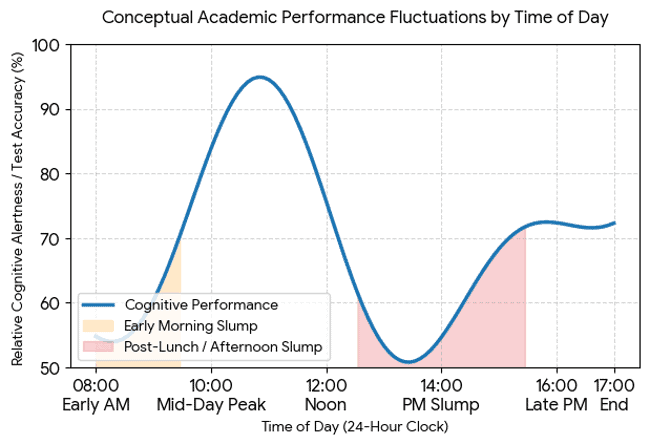
Research in chronobiology and education suggests that student attention is not constant throughout the day. Instead, attention and learning readiness tend to rise through the morning, often peaking during the late-morning hours before declining later in the day (Escribano & Díaz-Morales 2014; Valdez 2019).
For many students, the period between approximately 10:00 a.m. and noon represents a window of strong sustained attention, executive function, and cognitive performance. During this time, students may be best positioned to absorb new information, solve complex problems, and participate in collaborative learning activities.
Is the Afternoon Slump Real?
While sluggish mornings affect some students, extensive circadian research shows the afternoon slump affects almost everyone. The “post-lunch dip” is a predictable decline in alertness and concentration that typically occurs between about 1:00 p.m. and 4:00 p.m. Interestingly, researchers have found that this dip occurs even when lunch is skipped, suggesting it is driven largely by internal circadian rhythms rather than digestion alone (Valdez 2019).
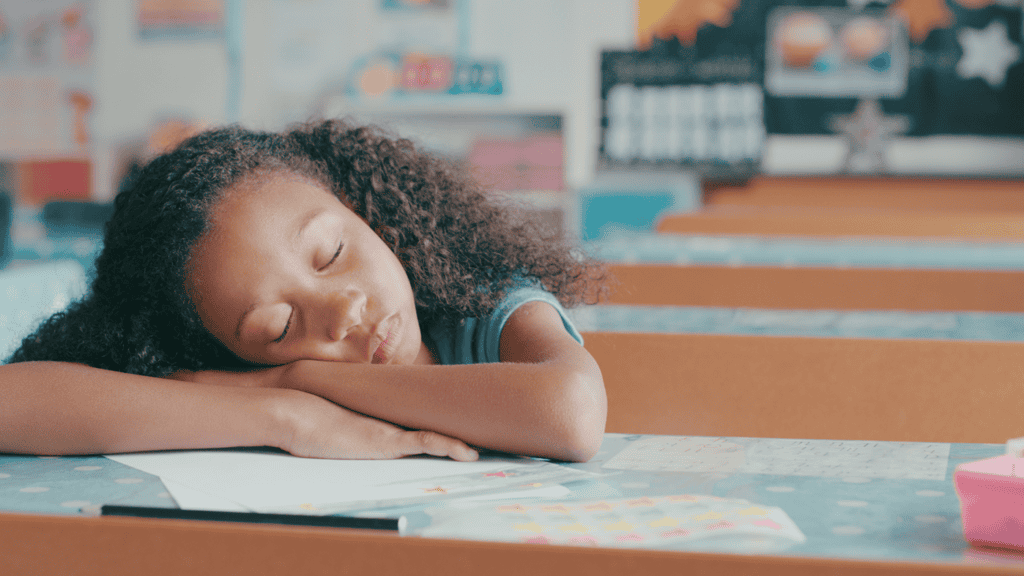
During this Period, Students May Experience:
- Reduced sustained attention
- Increased mind wandering
- Lower engagement
- Slower cognitive processing
In classrooms, these changes can make it more difficult to maintain focus during lectures, discussions, and problem-solving activities.
Can Light Help Students Maintain Focus in Class?
A growing body of research suggests the answer is yes. But not all light has the same effect.
Studies have shown that bright and blue-enriched light exposure can improve alertness, reduce sleepiness, and support cognitive performance during periods when attention would otherwise decline (Viola et al. 2008; Askaripoor et al. 2019; Zhou et al. 2021). Classroom studies have similarly found that blue-enriched lighting can improve concentration, processing speed, and student vitality compared with conventional classroom lighting (Barkmann et al. 2012; Keis et al. 2014).

Today, researchers increasingly focus on sky-blue colored melanopic light, that is, the portion of light that stimulates the body’s circadian and alertness systems. Higher melanopic light exposure, particularly during the morning and early afternoon, may help students remain more alert and engaged throughout the school day.
Why Melanopic Light Matters More Than Brightness
One of the biggest misconceptions in classroom lighting is that a bright classroom automatically provides healthy light. In reality, the circadian and alertness systems respond primarily to the amount of biologically effective light reaching the eyes, not simply the amount of light falling on desks or floors. This biologically relevant light is often quantified using melanopic equivalent daylight illuminance (m-EDI), a metric that reflects how strongly a light source stimulates the melanopsin-containing retinal cells that help regulate alertness, attention, and circadian rhythms.
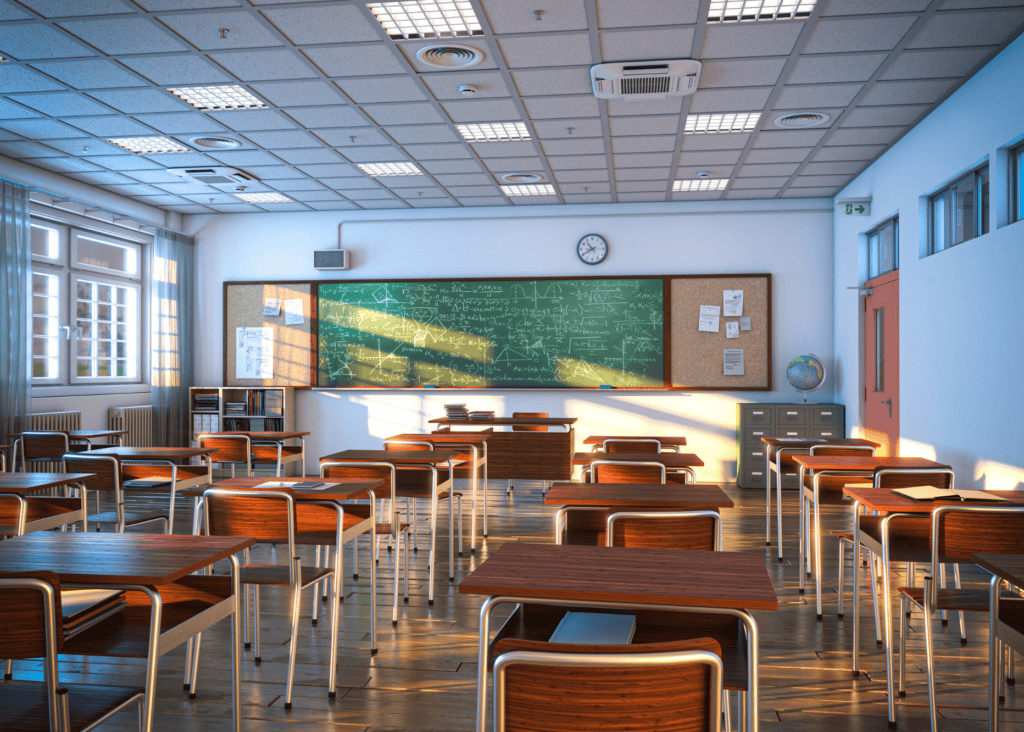
This distinction is particularly important in schools. A classroom may meet traditional lighting standards for visual tasks while still providing relatively low melanopic exposure to students. Daylight is often an excellent source of melanopic light, but its benefits are not evenly distributed. Students seated near windows may receive several times more biologically effective light than classmates seated deeper in the room. Shades are frequently lowered to reduce glare on whiteboards, projectors, and displays, further reducing the amount of healthy daylight reaching students’ eyes. As a result, many students spend much of the school day under lighting conditions that are visually adequate but biologically underpowered.
Read: Bright Students – Dark Classrooms – Why Healthier School Lighting Matters
What is the Best Lighting for Classrooms?
The science is increasingly clear: students benefit from higher levels of biologically effective light during the morning hours and throughout the afternoon attention slump. The challenge is delivering that light in a way that is comfortable, energy efficient, and practical for real classrooms where glare is a constant issue.
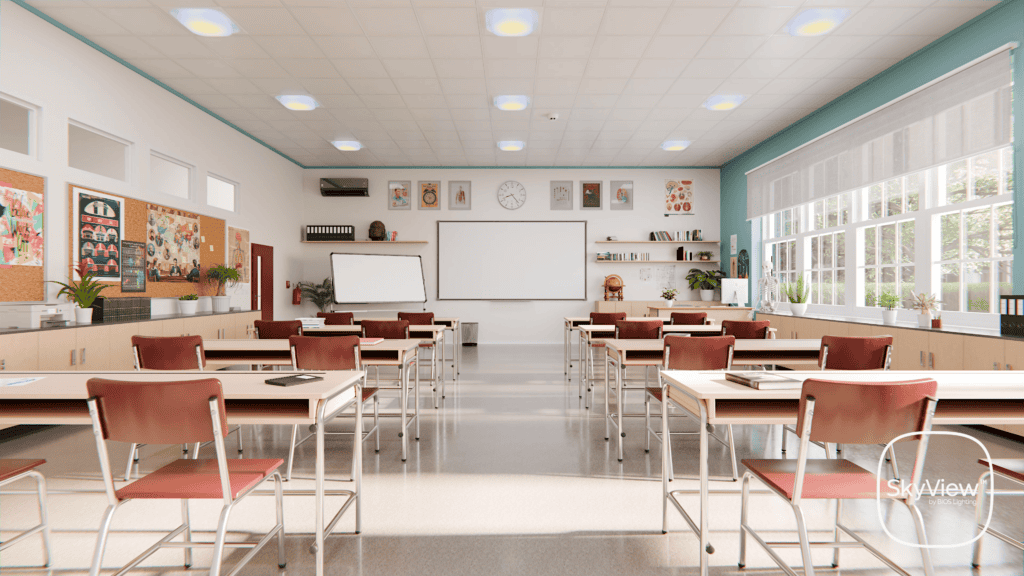
SkyView™ Healthy Blue Sky Lighting was developed specifically to address these challenges. Unlike conventional blue-enriched lighting systems that often rely on increasing brightness or color temperature throughout the room, SkyView™ uses patented Blue Sky Gradient™ technology to direct melanopic-rich blue sky light toward the vertical plane, where it is most effective at stimulating alertness and circadian responses. At the same time, warmer light is directed downward onto desks and learning surfaces, creating a more comfortable visual environment with reduced glare.
This approach allows SkyView™ to deliver the high melanopic exposure needed to support student focus and engagement while avoiding many of the comfort concerns associated with earlier, blue-enriched lighting systems. Unlike daylighting, which can vary dramatically with weather, window location, time of day, and students’ seating positions, SkyView™ provides consistent, evenly distributed biologically effective light throughout the classroom. The result is learning environments from kindergarten through college where every student, regardless of where they sit in the classroom, can benefit from healthy blue-sky light that supports attention, alertness, and academic performance throughout the school day.
References
Askaripoor T, Motamedzade M, Golmohammadi R, Farhadian M, Babamiri M, Samavati M. Effects of light intervention on alertness and mental performance during the post-lunch dip: a multi-measure study. Industrial health. 2019;57(4):511-24. https://doi.org/10.2486/indhealth.2018-0030
Barkmann C, Wessolowski N, Schulte-Markwort M. Applicability and efficacy of variable light in schools. Physiology & behavior. 2012 Feb 1;105(3):621-7. https://doi.org/10.1016/j.physbeh.2011.09.020
Escribano C, Díaz-Morales JF. Daily fluctuations in attention at school considering starting time and chronotype: an exploratory study. Chronobiology international. 2014 Jul 1;31(6):761-9. https://doi.org/10.3109/07420528.2014.898649
Goldin AP, Sigman M, Braier G, Golombek DA, Leone MJ. Interplay of chronotype and school timing predicts school performance. Nature Human Behaviour. 2020 Apr;4(4):387-96. https://doi.org/10.1038/s41562-020-0820-2
Keis O, Helbig H, Streb J, Hille K. Influence of blue-enriched classroom lighting on students׳ cognitive performance. Trends in Neuroscience and Education. 2014 Sep 1;3(3-4):86-92. https://doi.org/10.1016/j.tine.2014.09.001
Minges KE, Redeker NS. Delayed school start times and adolescent sleep: a systematic review of the experimental evidence. Sleep medicine reviews. 2016 Aug 1;28:86-95. https://doi.org/10.1016/j.smrv.2015.06.002
Valdez P. Circadian rhythms in attention. The Yale journal of biology and medicine. 2019 Mar 25;92(1):81. https://pmc.ncbi.nlm.nih.gov/articles/PMC6430172/
Vicario CM, Nitsche MA, Lucifora C, Perconti P, Salehinejad MA, Tomaiuolo F, Massimino S, Avenanti A, Mucciardi M. Timing matters! Academic assessment changes throughout the day. Frontiers in psychology. 2025 Jul 24;16:1605041. https://doi.org/10.3389/fpsyg.2025.1605041
Viola AU, James LM, Schlangen LJ, Dijk DJ. Blue-enriched white light in the workplace improves self-reported alertness, performance and sleep quality. Scandinavian journal of work, environment & health. 2008 Aug 1:297-306. http://www.jstor.org/stable/40967721
Yeo SC, Lai CK, Tan J, Lim S, Chandramoghan Y, Tan TK, Gooley JJ. Early morning university classes are associated with impaired sleep and academic performance. Nature Human Behaviour. 2023 Apr;7(4):502-14. https://doi.org/10.1038/s41562-023-01531-x
Zhou Y, Chen Q, Luo X, Li L, Ru T, Zhou G. Does bright light counteract the post-lunch dip in subjective states and cognitive performance among undergraduate students?. Frontiers in public health. 2021 Jun 7;9:652849. https://doi.org/10.3389/fpubh.2021.652849