


Research in neuroscience, sleep medicine, and chronobiology has shown that a child’s ability to learn depends on much more than the quality of teaching. Sleep, nutrition, physical activity, and the right light at the right time all influence mood, focus, alertness, memory, and classroom performance. Here are five science-backed ways to help your child start every school day ready to learn.

Build a Consistent Sleep Routine
Sleep is when the brain consolidates memories, processes new information, and prepares for another day of learning. Unfortunately, research shows that many students begin the school year with irregular sleep schedules that leave them biologically unprepared for early morning classes.
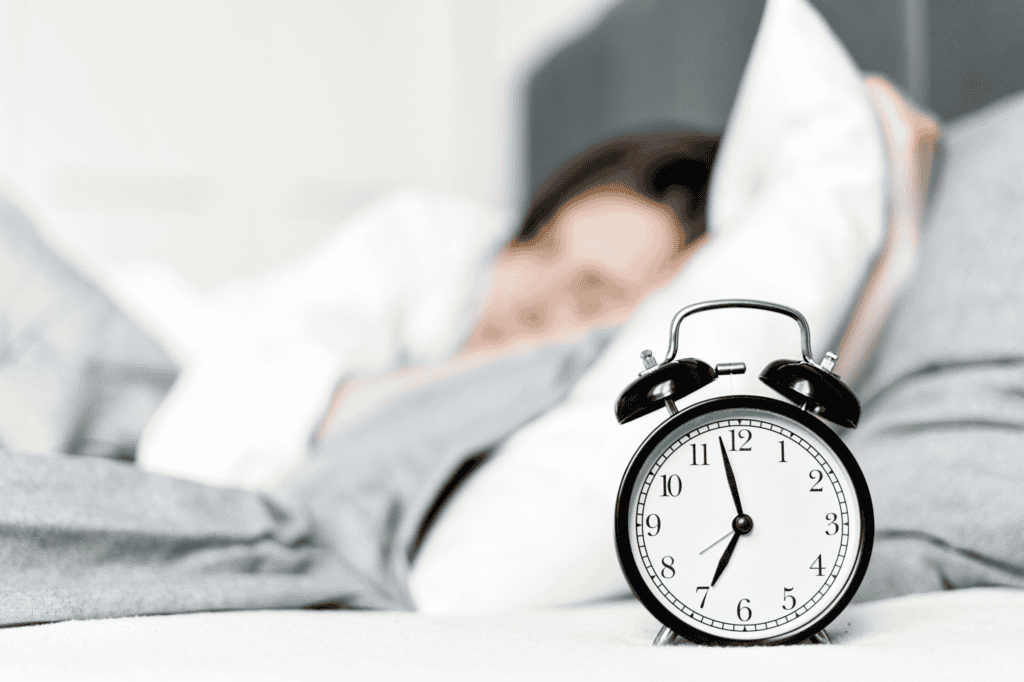
Controlling the timing of blue sky light exposure can help set proper day/night routines. Aim for a consistent bedtime and wake-up time with appropriate lighting, even on weekends. Begin adjusting summer schedules one to two weeks before school starts so your child’s internal clock is synchronized with the school day.
Read: How does our circadian rhythm affect our health?

Give Their Brain the Blue Sky Morning Light it Needs
This may be the most overlooked step in preparing children for school. Morning light is the body’s primary signal that it’s time to be awake.
Specialized light-sensitive cells in the eye respond most strongly to the blue wavelengths naturally found in a clear morning sky. These cells communicate directly with the brain regions that regulate alertness, mood, and the body’s circadian clock.
This may be the most overlooked step in preparing children for school. Morning light is the body’s primary signal that it’s time to be awake. Specialized light-sensitive cells in the eye respond most strongly to the blue wavelengths naturally found in a clear morning sky. These cells communicate directly with the brain regions that regulate alertness, mood, and the body’s circadian clock.

The best source is natural daylight. Open the curtains during breakfast, encourage children to spend a few minutes outdoors before leaving for school, or walk or bike when possible. But daylighting can be limited in buildings, and worse during winter months, cloudy mornings, or before sunrise. In these all-to-common cases, healthy blue-sky lighting indoors can help provide the biologically effective light needed to support daytime alertness. Schools are likewise adapting by setting later start times and installing healthier lighting.
Read: Healthy classroom lighting – as fundamental as ABC

Feed the Brain, Not Just the Stomach
The brain uses more energy than any other organ in the body. A breakfast rich in protein, fiber, healthy fats, and complex carbohydrates provides a steady supply of fuel that supports concentration throughout the morning. Skipping breakfast or relying on sugary foods may lead to energy crashes that make it harder for students to pay attention and retain new information.
Healthy light in the morning not only prepares the body to eat but also helps to get your student past the morning drowsiness and afternoon learning slump, even if meals are skipped. So, get your kids up early with good food and good light to power their day. This is another reason educational institutions are now considering the impact of blue sky light on student performance.
Read: The tale of two learning slumps: Can better classroom lighting help students stay focused?

Get Moving Before School
Physical activity doesn’t just strengthen muscles—it primes the brain for learning. Even 10 to 20 minutes of walking, biking, or active play before school increases blood flow to the brain and has been associated with improvements in attention, executive function, and classroom behavior. Exercise also helps reduce stress and anxiety, allowing students to arrive at school more focused and ready to engage.

Research shows that children with healthier sleep schedules and circadian body clock timing are more able to wake in the morning and engage in physical activity prior to school. Better aligned circadian clocks even allow kids to ride out daylight savings time and other schedule shifts to keep focused and energized at school.
Read: Circadian lighting improves child sleep transitions and mood – The parent study – Part 1

Protect Healthy Sleep at Night
The same blue light that helps us feel awake in the morning can work against us at bedtime. Phones, tablets, and laptops emit light that can delay the natural evening release of melatonin, making it harder for children to fall asleep. Indeed, this challenge is amplified in adolescents and teens affected by their “night owl” tendencies and delayed circadian clocks possibly driven by increased blue light sensitivity.

Encourage screen-free time during the hour before bed and create a relaxing nighttime routine with dimmer, warmer lighting. For those evening homework sessions, blue light blocking glasses have also been shown to be effective at dampening the daytime signal. During sleep its best to have no light or dim red light to avoid melatonin suppression.
Read: What is the healthiest type of light?
Read: Debunking the blue light myth: why blue light blockers are the problem
Start Your Best School Year Before the First Bell
Parents often focus on homework, tutoring, or study habits to improve academic performance. While those are important, the science tells us that learning begins even earlier. A child’s brain performs best when it receives the biological signals it evolved to expect: quality sleep, nourishing food, regular movement, and healthy blue-sky light during the day.
More research is connecting diet, exercise and now indoor light exposure with student mood, attention, alertness, and learning readiness. Although student performance contributions are complex, it is becoming clear that healthy light exposure, like healthy sleep schedules, nutrition, and exercise are key to helping kids think, learn, and thrive.
And if you think about it: are these fundamental drivers of performance so different for us adults?
Read: Boosting blue sky light indoors reveals fundamental drivers of office productivity