

Why School Offices Lighting Often Lacks “Blue-Sky” / Melanopic Light
School office areas—front offices, nurse’s rooms, teacher lounges, workrooms, principals’ offices—are typically lit using standard overhead LED or fluorescent fixtures. These lights are often chosen for visual clarity, energy efficiency, and cost. But despite bright photopic (visual) illuminance, their spectral content (especially around 490 nm, the short-wavelength “sky-blue” light to which the circadian melanopsin receptor in the eye is most sensitive) is usually weak.
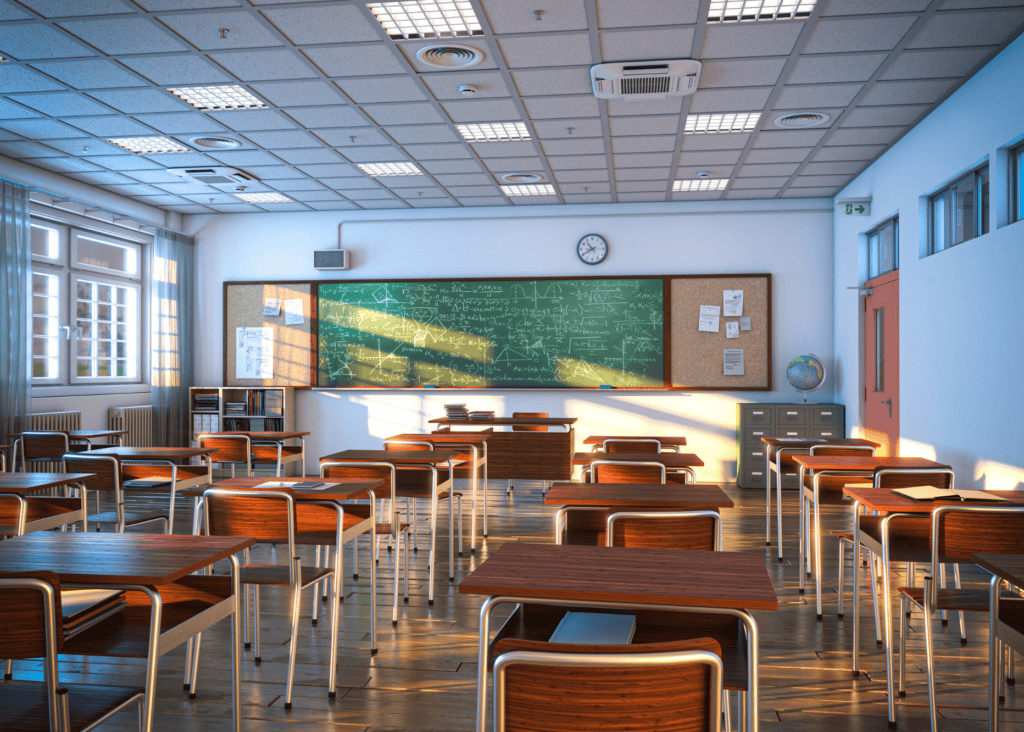
Daylighting has been the standard recommendation for US and European school design since the early 1980s (Costanzo et al. 2017). Since that time, thoughtful design has given classrooms banks of south-facing windows resulting in improved daylighting – although often still below melanopic exposure recommendations due to latitude, season, weather, louvering, etc. (Ezpeleta et al. 2021). Lighting considerations for support staff rooms has received less attention.
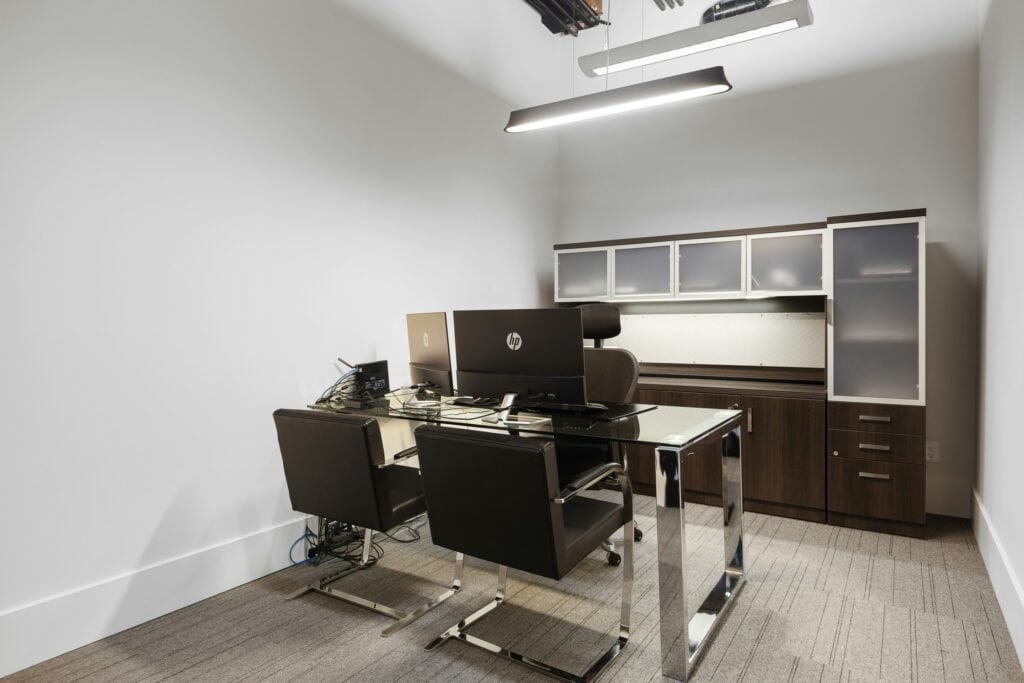
Lighting recommendations for school offices is often aligned with general office lighting requirements that emphasizes task plane, not wellness, illumination. Further, given the priority for classroom daylighting school support rooms are often relegated to interior positions or orientations that severely limit natural illumination.
Research has shown that the standard light sources in many workplaces deliver melanopic equivalent daylight illuminance (melanopic EDI, or m-EDI) values well below recommended thresholds (Brown et al. 2022; Ticleanu et al. 2025). In school offices, similar issues occur: even if a front office or workroom is “bright” in visible light, if the fixtures are low correlated color temperature (CCT) or poor in blue spectral power, the melanopic stimulus remains low (Figure 1). In the field measurements below, the front office daylighting and LED panels provided only 58% of the wellness threshold despite the generally bright room. This matters, because melanopic light drives non-visual effects: alertness, mood, focus, and circadian rhythm alignment—not just seeing the paperwork.
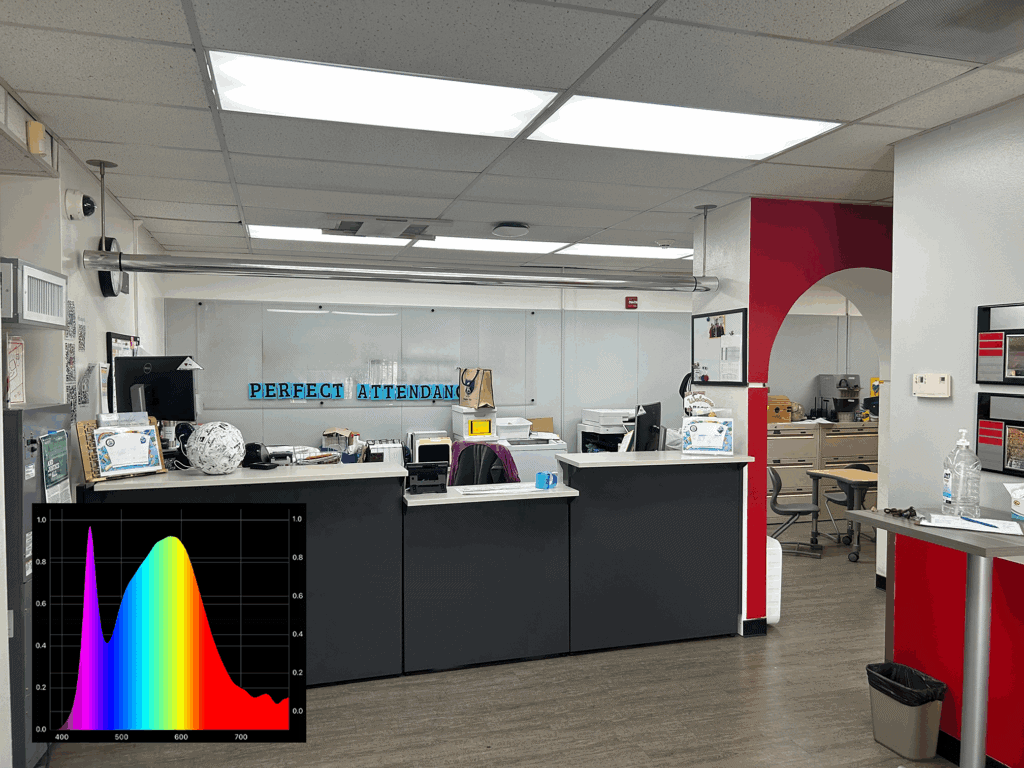
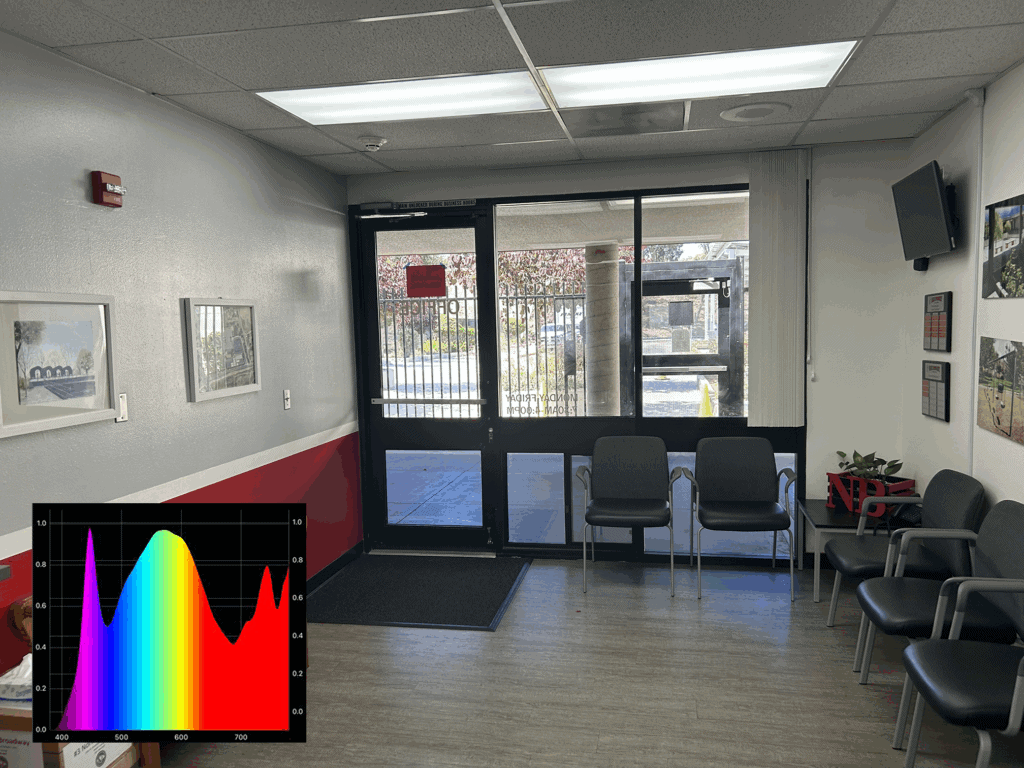
Figure 1. Light measurements from an elementary school front office, Southern California, 9 June 3pm. Office illumination is a combination of LED troffer panels and daylighting. Horizontal photopic light on the front counter is 645 lux. Vertical melanopic EDI (m-EDI) at desks is 146 lux.
Importance of Melanopic Light (> 250 lux EDI) for School Office Staff
Scientific guidance and recent peer-reviewed studies suggest that ≥250 lx melanopic EDI at the eye (vertical plane, seated position) during daytime is a key target to support alertness, mood, cognitive performance, and circadian health in daytime workplace and educational settings (Brown et al. 2022). Daylighting and blue-enriched white light in corporate office settings has been shown to improve subjective alertness, concentration, mood, and reduce evening fatigue compared to more conventional lighting sources, for example 4000 K vs. ~17000 K CCT (Mills et al. 2007; Viola et al. 2008; Grant et al. 2023).
For non-teacher staff who are more desk-bound, having continuous access during their key working hours to high-melanopic light can mitigate fatigue, improve interpersonal interactions, reduce mistakes, and support better decision-making. Given their vital ‘front-office’ role in welcoming students and parents to the school building and ‘back office’ role of managing school record, health and logistics, support staff mood, focus, and alertness should be high priority.
SkyView™ Tile is an Easy One-for-One Swap Out Fix for School Lighting
Given these gaps in melanopic exposure, SkyView™ Tile offers a practical retrofit solution for schools. Because many school offices use troffer-style LED or fluorescent panels, a 1:1 swap of standard troffers with SkyView™ Tiles can bring in improved spectral content—especially boosting short-wavelength, blue-sky light—without needing full rewiring or major renovations.
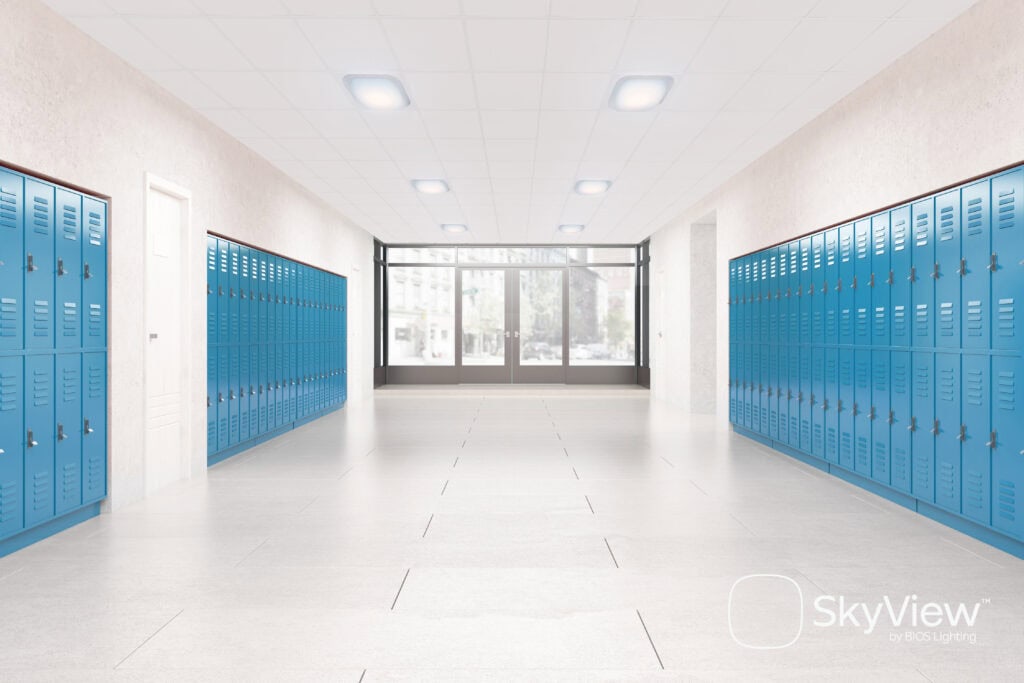
Here’s why this swap strategy works:
- Spectrum engineered: SkyView™ Tiles are designed to provide higher melanopic content than standard fixtures, helping reach or exceed that 250 lx melanopic EDI target during daytime.
- Low disruption: Same form factor as standard tiles means minimal installation complexity; schools don’t need to reconfigure ceilings or drastically change layout.
- Energy efficiency & glare control: While enhancing non-visual light stimulus, good fixture design (0.4W/ft2, diffusers, low-glare lenses, spatial color separation tech) maintains visual comfort and avoids common complaints of harsh or overly “blue” lighting.
- Cost-effectiveness: Over time, better light exposure can reduce fatigue, errors, absenteeism—all of which have operational and financial impact (Hartke et al. 2025).
The recommendation of 250 lx melanopic EDI as a benchmark is now appearing in lighting metrics guides and consensus documents, building momentum for its inclusion in office and school facility standards like ANSI/IES RP-46-23 and RP-3-20. Since non-teacher school staff are integral to daily operations and the student/parent experience, ensuring they have sufficient exposure to >250 lx melanopic EDI during daytime can boost mood, alertness, focus, and overall well-being. SkyView™ Tile offers a straightforward retrofit path—a one-for-one swap that delivers the needed spectral quality without overhaul. Schools that adopt this approach can expect measurable improvements in staff performance, wellness, and by extension, the quality of the school environment as a whole.
References
Brown TM, Brainard GC, Cajochen C, Czeisler CA, Hanifin JP, Lockley SW, Lucas RJ, Münch M, O’Hagan JB, Peirson SN, Price LL. Recommendations for daytime, evening, and nighttime indoor light exposure to best support physiology, sleep, and wakefulness in healthy adults. PLoS biology. 2022 Mar 17;20(3):e3001571.
Costanzo V, Evola G, Marletta L. A review of daylighting strategies in schools: State of the art and expected future trends. Buildings. 2017 May 13;7(2):41.
Ezpeleta S, Orduna-Hospital E, Solana T, Aporta J, Pinilla I, Sánchez-Cano A. Analysis of photopic and melanopic lighting in teaching environments. Buildings. 2021 Sep 27;11(10):439.
Grant LK, Crosthwaite PC, Mayer MD, Wang W, Stickgold R, St. Hilaire MA, Lockley SW, Rahman SA. Supplementation of ambient lighting with a task lamp improves daytime alertness and cognitive performance in sleep-restricted individuals. Sleep. 2023 Aug 1;46(8):zsad096.
Hartke, J., Worden, K., Yang, M., & Gray, W. A. (2025). Investing in Health Pays Back, 2nd Edition: The business case for healthy buildings and healthy organizations. International WELL Building Institute. www.wellcertified.com/health-pays-back/second-edition
Mills PR, Tomkins SC, Schlangen LJ. The effect of high correlated colour temperature office lighting on employee wellbeing and work performance. Journal of circadian rhythms. 2007 Dec;5:1-9.
Thomson P, Ellison L, Byrom T, Bulman D. Invisible labour: Home–school relations and the front office. Gender and Education. 2007 Mar 1;19(2):141-58.
Ticleanu C, Flores-Villa L, Littlefair P, Howlett G. Assessing melanopic equivalent daylight illuminance in office spaces using a simplified approach for predominantly cloudy climates. Lighting Research & Technology. 2025 Feb 24:14771535251317740.
Viola AU, James LM, Schlangen LJ, Dijk DJ. Blue-enriched white light in the workplace improves self-reported alertness, performance and sleep quality. Scandinavian journal of work, environment & health. 2008 Aug 1:297-306.